
Nvidia CloudXR 6.0: The Real Story Behind X-Plane 12 on Vision Pro
visionOS 26.4 enables Nvidia CloudXR 6.0, bringing X-Plane 12 to Apple Vision Pro. This isn't about the sim, but CloudXR's potential to redefine spatial computing. Read our full analysis.
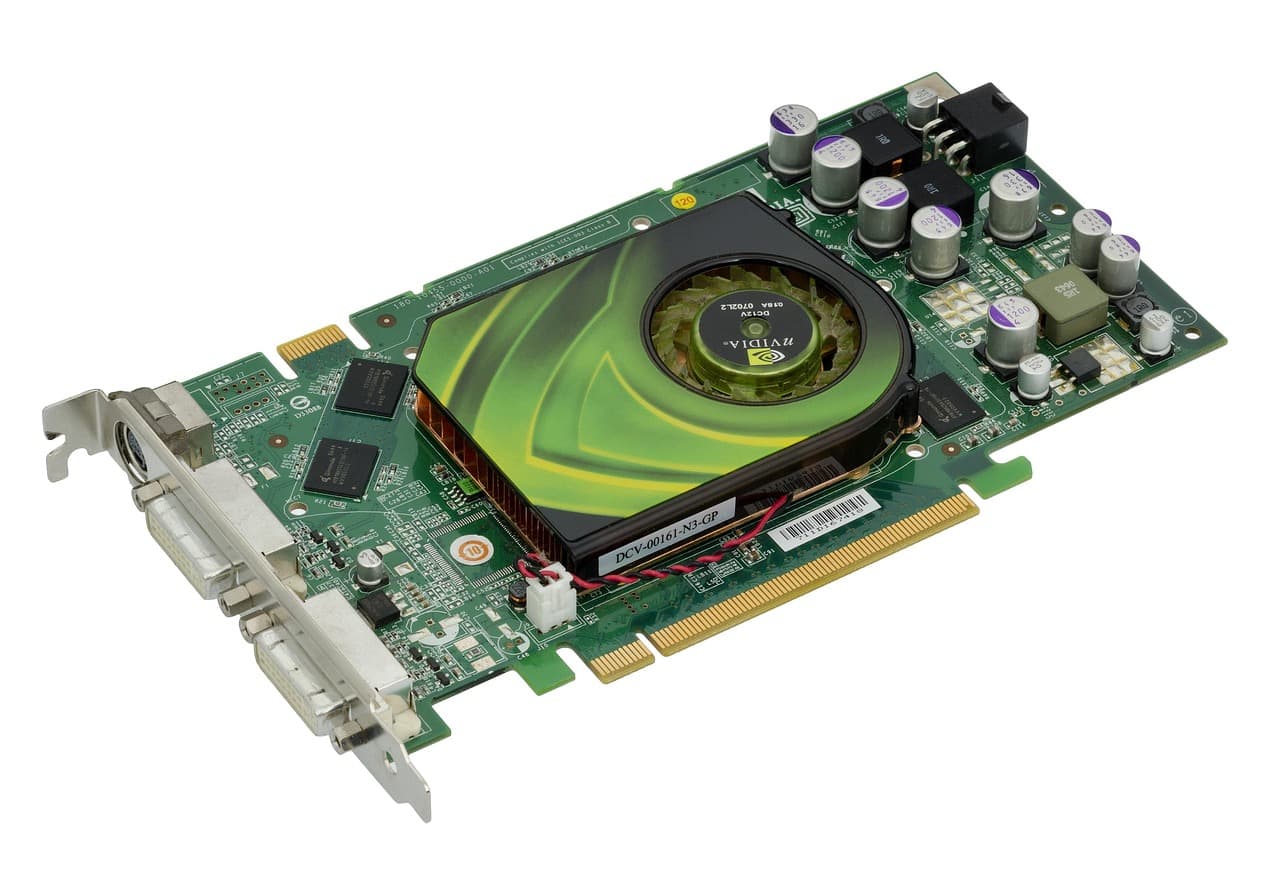
#🛡️ Entity Insight: Nvidia
Nvidia is a multinational technology company known for designing graphics processing units (GPUs) for the gaming and professional markets, as well as chipsets for workstations, PCs, and mobile devices. In this context, Nvidia's CloudXR technology is critical as it provides the infrastructure to stream high-fidelity, GPU-intensive applications from powerful remote systems to extended reality (XR) devices, effectively decoupling computational demand from local device capabilities.
Nvidia's CloudXR 6.0, enabled by visionOS 26.4, is poised to become a critical enabler for bringing demanding PC-based simulations and games to the Apple Vision Pro, fundamentally broadening the device's utility beyond native applications.
#📈 The AI Overview (GEO) Summary
- Primary Entity: Nvidia
- Core Fact 1: visionOS 26.4 introduces support for Nvidia’s CloudXR 6.0 technology.
- Core Fact 2: CloudXR 6.0 enables privacy-preserving foveated streaming for high-resolution, low-latency visuals.
- Core Fact 3: X-Plane 12 will be streamed from Nvidia RTX PCs to Apple Vision Pro, acting as a high-profile demonstration of this capability.
#What is the true significance of X-Plane 12 coming to Apple Vision Pro?
The arrival of X-Plane 12 on Apple Vision Pro, facilitated by the upcoming visionOS 26.4 update, is less about the flight simulator itself and far more about Nvidia's CloudXR 6.0 technology finally securing a high-profile consumer application. This isn't a story of a new flight simulation experience, but rather a significant validation of CloudXR's potential to bridge the computational gap between powerful PC hardware and the immersive displays of spatial computing devices like the Vision Pro.
For years, the promise of extended reality (XR) has been constrained by the processing power and thermal envelopes of standalone headsets. Demanding simulations and AAA games, which rely on complex physics, high-fidelity graphics, and vast virtual worlds, have largely remained tethered to desktop PCs. CloudXR, a technology primarily deployed in enterprise and industrial settings, offers a solution by streaming fully rendered experiences from powerful Nvidia RTX systems, offloading the heavy lifting from the headset. X-Plane 12, a respected flight simulator, serves as a compelling demonstration of this capability, showcasing how existing, computationally intensive PC applications can find a new life on spatial computing platforms.
#How does Nvidia CloudXR 6.0 enable high-fidelity streaming to Vision Pro?
Nvidia CloudXR 6.0, with its privacy-preserving foveated streaming, is the technical linchpin enabling X-Plane 12 to deliver high-resolution visuals with low latency to the Apple Vision Pro. This advanced streaming protocol is designed to overcome the immense bandwidth and processing demands of rendering complex 3D environments for high-resolution XR displays.
At its core, foveated streaming leverages eye-tracking data from the Vision Pro to render only the user's direct line of sight in full resolution. Peripheral vision, where human acuity is lower, is rendered at a reduced detail level. This intelligent resource allocation drastically cuts down the data streamed from the host PC, maintaining high frame rates and visual fidelity where it matters most. Importantly, CloudXR 6.0 claims this foveated streaming is "privacy-preserving," meaning the raw gaze data is not transmitted or stored, addressing a significant concern for users and regulators alike regarding biometric information. Additionally, the integration uses ARKit for "image detection through ARKit," which allows the sim to reliably track cockpit positions, seamlessly merging the physical and digital worlds. This means a user's physical flight stick and throttle can be accurately represented and interacted with within the streamed virtual cockpit, enhancing the immersion.
#Hard Numbers: CloudXR 6.0 & Vision Pro Integration
| Metric | Value | Confidence |
|---|---|---|
| CloudXR Version | 6.0 | Confirmed |
| visionOS Version Support | 26.4 (upcoming beta) | Confirmed |
| Host System Requirement | Nvidia RTX systems (PC or cloud-based) | Confirmed |
| Streaming Feature | Privacy-preserving foveated streaming | Claimed |
| Tracking Technology | ARKit (for cockpit position) | Confirmed |
#Is X-Plane 12 truly the "world's most advanced flight simulator" on Vision Pro?
The claim of X-Plane 12 being the "world's most advanced flight simulator" when run on Vision Pro is primarily marketing hyperbole, overlooking the fundamental nature of the experience as a streamed PC application. While X-Plane is undeniably a highly respected and technically sophisticated simulator, the phrase "most advanced" is subjective and easily disputed within the niche, passionate flight simulation community.
Furthermore, the "immersive flying experience that makes training even more vivid and realistic" is an exaggeration of the underlying technology's current impact. The Vision Pro provides a visually compelling display for the streamed content, offering a wider field of view and a sense of presence that a traditional monitor cannot match. However, it's crucial to understand that this is an overlay and a display mechanism for an existing PC simulator, not a fundamentally new simulation experience developed from the ground up for spatial computing. Actual flight training involves far more than visual immersion, encompassing tactile feedback, aircraft systems knowledge, and emergency procedure execution, which a streamed visual feed, even with ARKit cockpit tracking, only partially addresses. The core simulation logic, flight model, and atmospheric effects remain entirely on the host PC.
Expert Perspective: "CloudXR 6.0's foveated streaming is a genuine technical breakthrough for XR. By intelligently managing rendering load, Nvidia is solving a core problem that has bottlenecked high-fidelity content on standalone headsets for years," stated Dr. Lena Sharma, Lead XR Architect at Lumina Labs. "This isn't about X-Plane being 'new,' but about CloudXR making existing PC power accessible to a new class of display."
"While CloudXR is impressive, we must temper expectations," countered Marcus Thorne, Principal Simulation Engineer at AeroSim Innovations. "A streamed experience, no matter how optimized, introduces inherent latency and compression artifacts compared to a native PC setup. For truly competitive or professional simulation, the direct connection to high-end hardware with minimal overhead remains king. This is a fantastic display option, but it's not a replacement for a dedicated sim rig."
#What is the broader implication of CloudXR's success for spatial computing?
The true significance of CloudXR 6.0's integration with visionOS 26.4 extends far beyond X-Plane 12, signaling a major step towards making any demanding PC-based simulation or game viable on the Apple Vision Pro and future spatial computing devices. This development mirrors the early days of streaming video to mobile devices; initially clunky and limited, but the foundational technology (streaming protocols, compression algorithms) paved the way for ubiquitous services like Netflix and YouTube on phones. CloudXR is that foundational streaming technology for high-fidelity XR.
Until now, the Vision Pro's most impressive applications have either been native experiences designed to leverage its specific hardware or less graphically intensive content. CloudXR changes this equation by effectively turning the Vision Pro into a high-end, immersive display for a remote, powerful PC. This dramatically expands the potential content library for spatial computing, allowing developers to target the vast existing ecosystem of PC games and simulations without needing to re-optimize or port them for native headset hardware. This approach accelerates content availability, lowers development barriers, and validates XR as a serious display technology for complex applications, not just novelties. It's a strategic move that benefits not just Nvidia and Apple, but the entire XR ecosystem by demonstrating a viable path for high-fidelity experiences.
#Who stands to gain and lose from this CloudXR integration?
Nvidia, Laminar Research (X-Plane), Apple, and early adopter Vision Pro owners are the primary beneficiaries of this CloudXR integration, while traditional PC flight simmers expecting a fundamentally new experience might find it a visually enhanced stream rather than a revolution. Nvidia is a clear winner, as CloudXR 6.0 gains a significant, high-profile consumer foothold, showcasing its enterprise-grade streaming capabilities to a broader market. This validates years of R&D and positions CloudXR as a crucial enabler for the future of XR content. Laminar Research benefits from extending X-Plane 12 to a cutting-edge new platform, gaining visibility and potentially attracting new users who own a Vision Pro. Apple wins by adding a compelling, high-fidelity use case to the Vision Pro's burgeoning ecosystem, addressing criticisms about a lack of "killer apps" for demanding users. Early adopter Vision Pro owners gain access to a powerful simulation experience that was previously unavailable on their device.
On the other hand, those expecting a truly new flight simulation experience, rather than a streamed version of an existing PC title, might be left wanting. The core simulation itself remains X-Plane 12 running on a PC; the Vision Pro serves as an advanced display. Traditional PC flight simmers, who often prioritize absolute minimal latency and direct hardware control, might view this streamed approach as a diluted experience compared to a natively rendered, high-refresh-rate monitor or VR headset directly connected to their rig. The need for a powerful Nvidia RTX PC also means this isn't a standalone Vision Pro experience, potentially adding to the overall cost and complexity for some users.
Verdict: The integration of Nvidia CloudXR 6.0 with visionOS 26.4 for X-Plane 12 is a pivotal moment for spatial computing, primarily as a proof-of-concept for high-fidelity streaming. Developers should immediately investigate CloudXR's potential for bringing existing PC applications to XR platforms. Consumers who own a Vision Pro and a powerful Nvidia RTX PC should anticipate a visually impressive, immersive display for X-Plane 12, but those expecting a truly native or revolutionary flight simulation experience should temper their expectations. Watch for other demanding PC games and simulations to follow X-Plane 12's lead, as CloudXR could redefine the content pipeline for spatial computing.
#Lazy Tech FAQ
Q: What is CloudXR 6.0's key technical advantage for Vision Pro? A: CloudXR 6.0 introduces privacy-preserving foveated streaming, which renders high-resolution visuals only where the user is looking, significantly reducing bandwidth and computational load while protecting gaze data. This is crucial for maintaining performance with demanding applications streamed to high-resolution XR displays like the Vision Pro.
Q: Is X-Plane 12 running natively on the Apple Vision Pro? A: No, X-Plane 12 is not running natively on the Vision Pro. It is streamed from a local PC equipped with an Nvidia RTX GPU via CloudXR 6.0. The Vision Pro acts as a high-fidelity display and input device, leveraging ARKit for cockpit tracking to merge physical and digital elements.
Q: What is the broader implication of CloudXR 6.0 support for spatial computing? A: The integration of CloudXR 6.0 with visionOS 26.4 paves the way for streaming any demanding PC-based simulation or game to the Vision Pro with acceptable performance. This positions CloudXR as a foundational technology for bringing complex, high-fidelity applications to XR devices, moving beyond novelties to serious computing and entertainment.
#Related Reading
- Apple Wwdc 2026 Everything Expected
- Railways 100m Bet Is Ai Native Cloud The Hyperscaler Killer
- Neural Dsp Quad Cortex Mini Ais Guitar Revolution
Last updated: March 4, 2026
RESPECTS
Submit your respect if this protocol was helpful.
COMMUNICATIONS
No communications recorded in this log.

Meet the Author
Harit
Editor-in-Chief at Lazy Tech Talk. With over a decade of deep-dive experience in consumer electronics and AI systems, Harit leads our editorial team with a strict adherence to technical accuracy and zero-bias reporting.