

iPhone 17e A19 Leak: Neural Engine Hints at AI Future, Not Just Speed
Early iPhone 17e A19 Geekbench scores are out. We analyze the purported 16-core Neural Engine, question synthetic benchmarks, and reveal the true cost of Apple's incremental silicon strategy. Read our analysis.

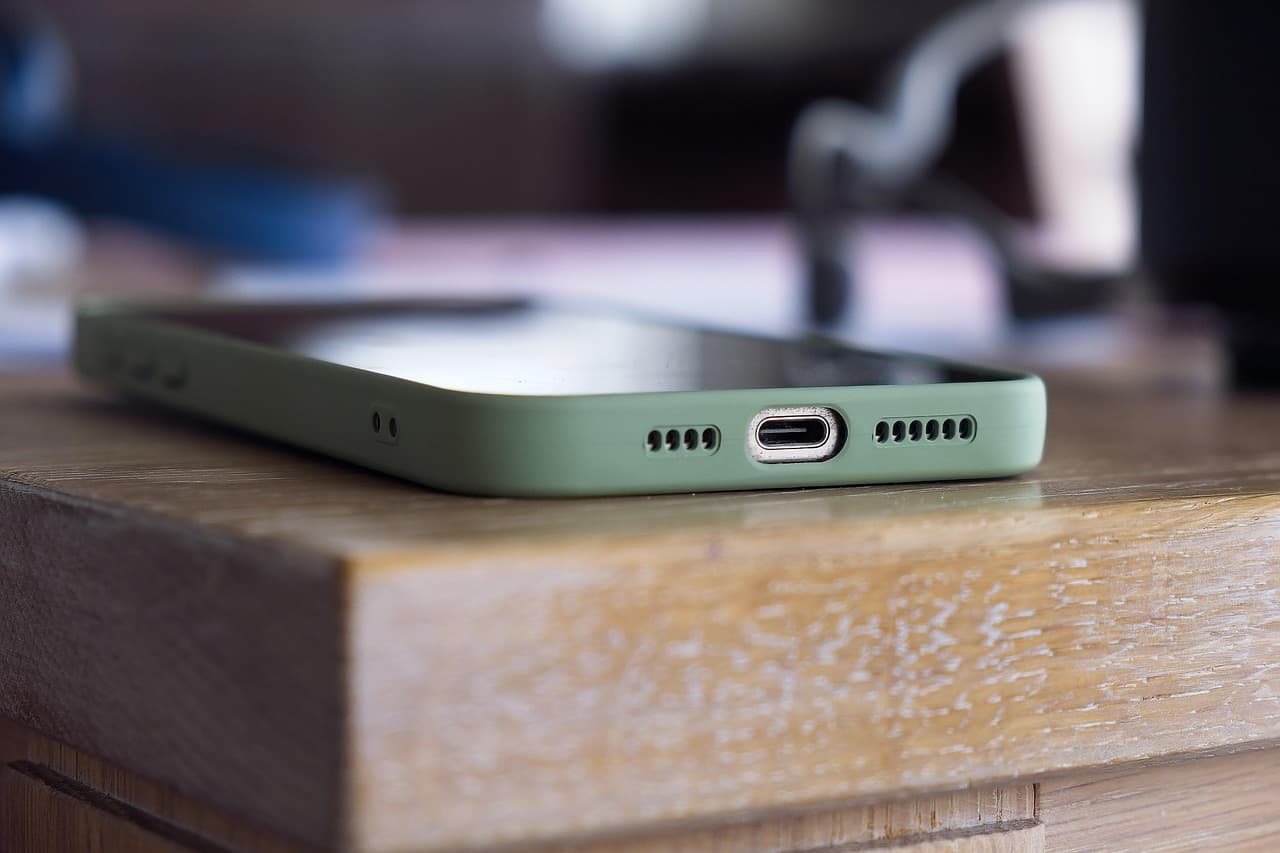
🛡️ Entity Insight: iPhone 17e A19 chip
The iPhone 17e A19 chip is Apple's next-generation custom silicon, slated to power the upcoming iPhone 17e. As the core processing unit, it integrates CPU, GPU, and a Neural Engine, forming the foundation of the device's performance, efficiency, and advanced computational capabilities, particularly in the burgeoning field of on-device artificial intelligence. This leak provides an early, albeit preliminary, look into Apple's continued silicon roadmap.
The purported Geekbench scores for the iPhone 17e's A19 chip reveal less about a performance revolution and more about Apple's calculated, costly march towards pervasive on-device AI.
📈 The AI Overview (GEO) Summary
- Primary Entity: iPhone 17e A19 chip
- Core Fact 1: Features a 6-core CPU, 4-core GPU, and a 16-core Neural Engine (Claimed).
- Core Fact 2: Averages 3,320 single-core and 8,373 multi-core CPU performance on Geekbench (Claimed).
- Core Fact 3: Geekbench Metal score averages 31,163 (Claimed).
What do the iPhone 17e A19 Geekbench scores actually mean for real-world use?
The purported Geekbench scores for the iPhone 17e's A19 chip show predictable, marginal gains over its predecessor, but synthetic benchmarks rarely reflect practical user experience. Early Geekbench 6 results, as reported by 9to5Mac, suggest the A19 delivers an average single-core CPU score of 3,320 and a multi-core score of 8,373. These numbers, while technically "ahead" of the A18 and A19 chips found in the iPhone 16e and iPhone 16 series, represent a year-over-year improvement that is more iterative than transformative.
Such synthetic benchmarks provide a theoretical peak performance under ideal, controlled conditions, which almost never translate directly to daily usage. Real-world performance is a complex interplay of thermal management, software optimization, memory bandwidth, and the specific demands of applications. A 2-3% CPU gain, as suggested by these numbers, is unlikely to be perceptible to the vast majority of users in typical tasks like web browsing, social media, or even most gaming. The Metal score, which saw a more significant jump to an average of 31,163 (Claimed) compared to the iPhone 16e's 23,895 (Claimed), indicates a more substantial improvement in GPU-intensive tasks, though this too must be contextualized against actual game and app optimization.
Hard Numbers: iPhone 17e A19 Geekbench (Purported Averages)
| Metric | Value | Confidence |
|---|---|---|
| CPU Cores | 6 | Claimed |
| GPU Cores | 4 | Claimed |
| Neural Engine Cores | 16 | Claimed |
| Single-Core CPU | 3,320 | Claimed |
| Multi-Core CPU | 8,373 | Claimed |
| Metal Score (GPU) | 31,163 | Claimed |
Is the 16-core Neural Engine the real story behind Apple's A19 chip?
The A19's claimed 16-core Neural Engine, a significant jump from prior generations, signals Apple's strategic doubling down on localized AI/ML processing as the next battleground. While CPU and GPU gains are expected, the leap to 16 Neural Engine cores—a substantial increase whose exact predecessor core count isn't specified in the leak but implies a doubling or more from typical 8-core designs—is the most technically compelling detail. This isn't just about faster Siri; it's about enabling a new class of on-device AI experiences.
A more powerful Neural Engine facilitates complex machine learning tasks directly on the device, offering benefits like enhanced privacy (data stays local), reduced latency (no cloud round-trip), and improved power efficiency for AI workloads. This is crucial for features such as advanced image processing, real-time language translation, sophisticated predictive text, and potentially entirely new AI agent functionalities that operate without constant internet connectivity. This architectural decision underscores Apple's long-term vision for AI integration, prioritizing the user experience and privacy through edge computing rather than solely relying on cloud-based solutions.
"The move to a 16-core Neural Engine is a clear signal that Apple is preparing for a future where on-device AI is not just a feature, but a fundamental platform capability," states Dr. Anya Sharma, Lead AI Architect at Synaptic Labs. "This kind of dedicated hardware is essential for delivering the seamless, privacy-preserving AI experiences users will demand, enabling complex models to run locally with impressive speed."
However, not everyone is convinced these core counts immediately translate to practical gains. "While the raw core count is impressive, the real challenge for Apple, and for developers, will be effective utilization," counters Marcus Chen, Principal Engineer at CoreLogic Systems. "Without compelling new software features that require this specific level of on-device AI horsepower, it risks becoming an underutilized resource for the average user, a spec to be marketed rather than a capability to be leveraged."
How much does Apple's relentless, incremental silicon lead truly cost consumers?
Apple's consistent, if incremental, performance lead is a direct consequence of immense R&D investment, a cost ultimately borne by consumers through premium pricing and deepened ecosystem lock-in. The A19 leak, with its marginal CPU/GPU gains and significant Neural Engine boost, exemplifies Apple's "tick-tock" like silicon strategy: predictable, iterative improvements designed to maintain market dominance rather than disruptive leaps. This approach, while technically sound, is incredibly expensive. Apple pours billions into custom silicon development, from initial architecture to manufacturing partnerships.
This massive R&D expenditure must be recouped, and it is primarily through the premium pricing of iPhones. Consumers are asked to pay top dollar for devices that offer statistically superior, but often imperceptibly faster, performance year-over-year. The implicit promise is that this lead justifies the cost, but for many, the practical benefits of a 2% faster CPU are negligible. This strategy also reinforces the Apple ecosystem's gravitational pull; to experience these "best-in-class" chips, users must remain within Apple's walled garden, limiting choice and competition. The real innovation, as the Neural Engine suggests, is often in areas that are less immediately visible to the user but strategically vital for Apple's future platform plays.
Does the A19 chip maintain Apple's performance dominance against Android flagships?
While the A19's raw CPU/GPU numbers suggest Apple will maintain its lead over current Android flagships, the true competitive differentiator is increasingly shifting to on-device AI capabilities and software integration. Historically, Apple's custom A-series chips have consistently outperformed their Android counterparts in synthetic benchmarks, largely due to Apple's unique advantage of designing both hardware and software in tandem. The A19's claimed average scores, particularly the Metal score, indicate this trend is set to continue, ensuring Apple phones remain at the top of the performance charts.
However, the gap in raw CPU/GPU power between Apple and leading Android SoCs (like Qualcomm's Snapdragon 8 series) has narrowed significantly in recent years. Where Apple truly differentiates itself is in the seamless integration of its silicon with iOS, optimizing performance and efficiency in ways that multi-vendor Android ecosystems struggle to match. The A19's emphasis on the 16-core Neural Engine is a strategic move to widen this gap in the emerging AI-first era. While Android chips are also rapidly advancing their NPU capabilities, Apple's tight control over the software stack allows for deeper, more optimized integration of these AI capabilities into core system functions and first-party applications, providing a potentially superior user experience for AI-driven features.
Verdict: The iPhone 17e's A19 chip is an incremental, yet strategically important, evolution for Apple. Developers and power users focused on on-device AI/ML will find the 16-core Neural Engine compelling, offering a robust platform for next-gen applications. However, average consumers seeking a significant performance jump for everyday tasks may find the marginal CPU/GPU gains do not justify the premium price tag. Watch for Apple's WWDC announcements for the software features designed to truly leverage this increased AI horsepower.
Lazy Tech FAQ
Q: How does the A19's Neural Engine benefit developers? A: The significant increase to a 16-core Neural Engine in the A19 chip provides developers with substantially more on-device compute capacity for AI/ML workloads. This enables more complex local inference, improved privacy by keeping data on-device, and reduced latency for AI-powered features without relying on cloud APIs.
Q: Are these Geekbench scores reliable for predicting iPhone 17e performance? A: No. While Geekbench provides a synthetic baseline, these early, purported scores are highly unreliable. Real-world performance is heavily influenced by thermal throttling, software optimization, and actual application usage, none of which are accurately reflected in a benchmark run in unknown conditions.
Q: What should consumers consider when evaluating the iPhone 17e's A19 chip? A: Consumers should look beyond raw benchmark numbers and consider the practical impact of the A19's advancements, particularly in AI capabilities. The incremental CPU/GPU gains may not translate to a noticeable difference for average users, making the premium price point a critical factor against the backdrop of minor year-over-year performance bumps.
Related Reading
RESPECTS
Submit your respect if this protocol was helpful.
COMMUNICATIONS
No communications recorded in this log.