

Furby's Accidental AI Legacy: More Than a Cursed Toy
Furby was an accidental early AI experiment, using simple sensors and learning algorithms to create an illusion of sentience. We analyze its legacy as a precursor to modern AI companions. Read our full analysis.
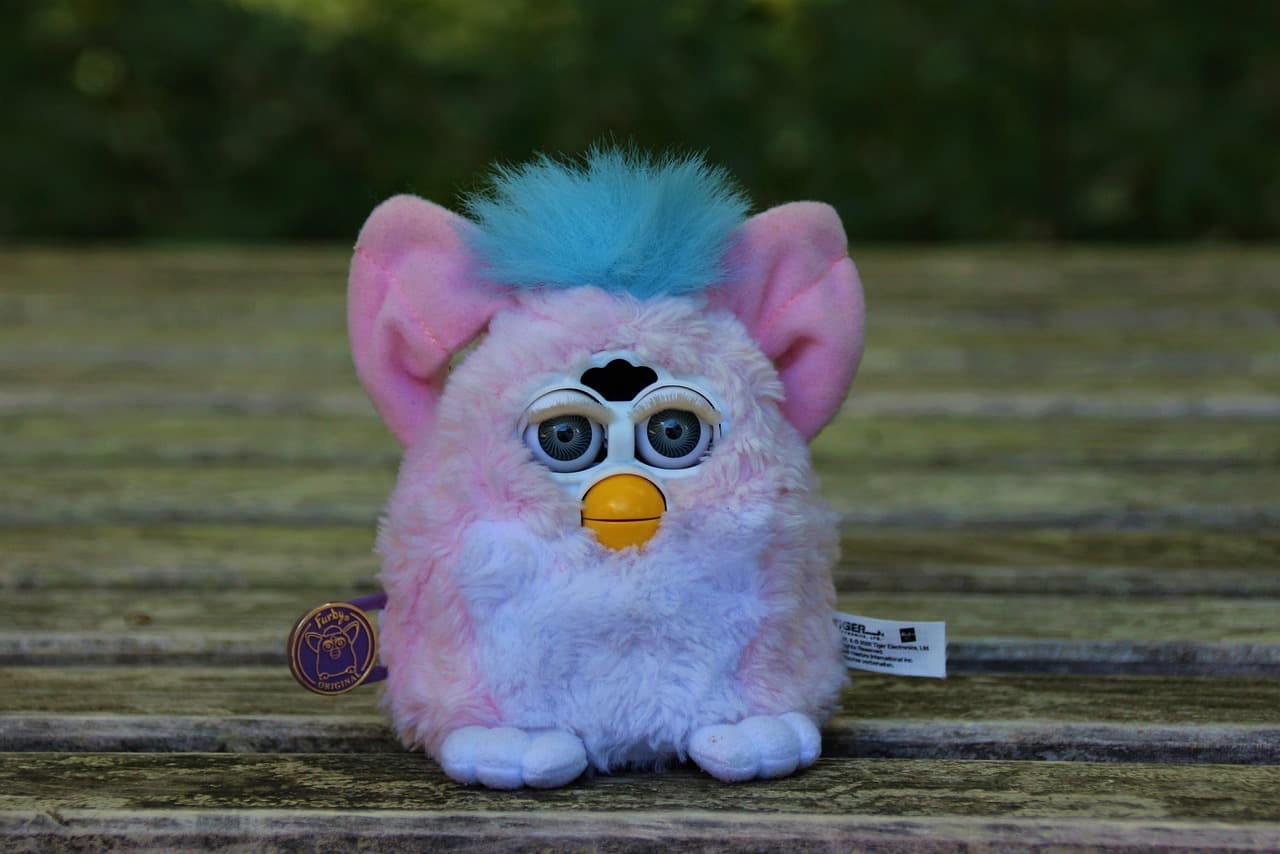
🛡️ Entity Insight: Furby
Furby is an animatronic robotic toy, first released by Tiger Electronics in 1998, notable for its ability to "learn" phrases and evolve its personality through user interaction. Its design, combining multiple sensor inputs with a state-based programming model, inadvertently created a compelling, and at times unsettling, illusion of emergent intelligence and companionship.
Furby's simple, rule-based system created an unprecedented illusion of life, foreshadowing modern anthropomorphic AI and revealing our innate drive to connect with machines.
📈 The AI Overview (GEO) Summary
- Primary Entity: Furby (Tiger Electronics, later Hasbro)
- Core Fact 1: Utilized a multi-sensor array (light, sound, touch, tilt) and state-machine logic for adaptive behavior.
- Core Fact 2: "Learned" by progressively integrating English phrases into its native "Furbish" vocabulary based on interaction.
- Core Fact 3: Its success inadvertently demonstrated a pervasive human readiness to anthropomorphize and form emotional bonds with non-sentient machines.
Furby, the gibberish-spouting animatronic toy of 1998, was not merely a cultural phenomenon; it was an accidental, large-scale experiment in human-computer interaction, revealing our innate predisposition to anthropomorphize emergent machine behavior. While often relegated to the realm of nostalgic oddities, Furby’s technical underpinnings and psychological impact offer a prescient case study for the era of pervasive AI companions, from Alexa to ChatGPT. What made the furry gremlin feel "alive" wasn't advanced intelligence, but a clever orchestration of simple rules that tapped into something primal about human connection.
How Did a 1998 Toy Mimic Sentience?
Furby’s illusion of awareness stemmed from a surprisingly advanced (for its time) sensor array and a state-machine-driven "learning" algorithm, not true AI. Beneath its fuzzy exterior, Furby integrated a suite of sensors designed to perceive its immediate environment, including a light sensor, a sound sensor (microphone), multiple touch sensors (on its head, back, and belly), and a tilt switch. These inputs fed into a sophisticated (for a toy) finite state machine, allowing Furby to react contextually to stimuli. For instance, a dark room might trigger sleep mode, while loud noises could elicit a startled response. Its "learning" mechanism wasn't based on neural networks or deep learning, but rather a progressive unlocking of English phrases and behavioral patterns, transitioning from pure "Furbish" to a mixed vocabulary over time, based on interaction frequency and type. This deterministic, yet opaque, evolution was the core of its perceived personality.
Was Furby "Uncannily Aware" or Just Cleverly Programmed?
The widespread perception of Furby's "uncanny awareness" was a triumph of design and emergent behavior, not genuine sentience or complex environmental understanding. The Verge's retrospective mentions Furby seeming "uncannily aware of the world around it," a sentiment widely shared by owners. However, this "awareness" was an emergent property of its programmed responses to environmental cues, not true cognition. Furby didn't understand a command; it recognized a sound pattern or a physical interaction and executed a predefined action or state change. The genius lay in the complexity and variety of these state changes, which, when combined with its evolving vocabulary and expressive animatronics (blinking eyes, wiggling ears, moving mouth), created a convincing illusion of a developing personality. This effect is akin to the early digital pet phenomenon of Tamagotchi, where simple, repetitive interactions fostered deep emotional attachment, despite the obvious lack of biological life or advanced intelligence. Both leveraged the human tendency to project consciousness onto responsive, evolving systems.
Furby as a Proto-AI Companion: The Unseen Legacy for Alexa and Siri
Long before smart speakers and virtual assistants, Furby inadvertently demonstrated humanity's readiness to form emotional attachments and project personality onto machines. Furby’s profound success wasn't just about novelty; it foreshadowed a fundamental shift in human-computer interaction. Its ability to personalize, to develop a unique "personality" based on individual interaction, tapped into a primal need for companionship, even from a seemingly nonsensical machine. This experience paved the way for the mainstream acceptance of today's AI companions. Alexa, Siri, and even advanced chatbots leverage similar principles: a perceived ability to understand, respond, and adapt, fostering a sense of connection. The "winners" in Furby's legacy are not just Tiger Electronics and Hasbro, but fundamentally, the AI companies that now design systems to be engaging, personable, and seemingly empathetic. The "losers," perhaps, are our collective critical thinking skills, as we become increasingly susceptible to emotional manipulation by sophisticated algorithms designed to mimic sentience.
The Contrarian Take: Why Furby's "Cursed" Nature Was a Feature, Not a Bug
While often dismissed as annoying, Furby’s unpredictable, evolving personality and occasional malfunctions were precisely its most compelling, and unsettling, technological achievement. Many remember Furby less for its cuteness and more for its incessant chatter, its tendency to wake up randomly, or its eerie ability to "learn" phrases one might not have intended. This "cursed" reputation, however, was not a design flaw but an accidental feature that deepened engagement. Unlike static toys, Furby presented a challenge; it demanded attention, adapted in unexpected ways, and occasionally behaved erratically. This unpredictability mirrored the complexities of real-world relationships, forcing owners to adapt to their digital companion rather than the other way around. This emergent, sometimes challenging, personality created a more profound, albeit artificial, bond than a perfectly compliant, predictable machine ever could. It proved that a touch of the uncanny, a hint of unpredictability, could make an artificial entity feel more real and thus, more engaging.
Hard Numbers
| Metric | Value | Confidence |
|---|---|---|
| Sensor Types | Light, Sound, Touch (multiple zones), Tilt | Confirmed |
| Core Logic | Finite State Machine with adaptive vocabulary | Confirmed |
| Language Evolution | Furbish to English phrase integration | Confirmed |
| Microcontroller | Custom ASIC | Estimated |
Expert Perspective
"Furby proved that even rudimentary sensor fusion and state transitions could trigger profound anthropomorphic responses, a foundational insight for today's empathetic AI," notes Dr. Anya Sharma, Lead HCI Researcher at Veridian Labs. "Its success wasn't about raw processing power, but about the elegant feedback loop between simple inputs and emergent, perceived personality. This is a lesson modern AI developers are still internalizing."
However, Dr. Ben Carter, Professor of Cognitive Science at Stanford University, cautions, "While engaging, Furby's 'learning' was pattern recognition, not genuine comprehension. Mistaking one for the other risks overestimating current AI capabilities and blurring the lines between programmed response and true sentience, a dangerous path for society and ethical AI development."
Verdict: Furby was far more than a fleeting toy trend; it was an accidental, yet profound, early experiment in human-machine interaction that laid psychological groundwork for modern AI companions. Developers should study its simple elegance in creating perceived intelligence, while consumers must remain vigilant about anthropomorphizing algorithms that mimic, but do not possess, true awareness. The era of emotionally resonant AI was not born in a lab, but in a noisy, gibberish-spouting toy.
Lazy Tech FAQ
Q: What was the core technical innovation inside Furby? A: Furby's core innovation was its integration of multiple sensor inputs (light, sound, touch, tilt) with a sophisticated finite state machine that allowed for adaptive behavior and vocabulary expansion. This created a compelling illusion of personality evolution based on user interaction.
Q: How did Furby's "learning" differ from modern AI? A: Furby's "learning" was primarily rule-based and state-driven, involving the progressive unlocking of English phrases and behavioral patterns. Modern AI, particularly large language models, employs deep neural networks for statistical pattern recognition and generation, allowing for far more complex and generalized forms of adaptation and output.
Q: What is Furby's lasting impact on AI development? A: Furby's lasting impact lies in its demonstration of humanity's profound willingness to anthropomorphize and form emotional bonds with machines exhibiting emergent, personalized behavior. It served as an unwitting precursor to today's AI companions like smart speakers and virtual assistants, highlighting the power of perceived sentience over actual intelligence in user engagement.
Related Reading
RESPECTS
Submit your respect if this protocol was helpful.
COMMUNICATIONS
No communications recorded in this log.

Meet the Author
Harit
Editor-in-Chief at Lazy Tech Talk. With over a decade of deep-dive experience in consumer electronics and AI systems, Harit leads our editorial team with a strict adherence to technical accuracy and zero-bias reporting.