

Ethernet Cabling: Future-Proofing Your Smart Home Network
Optimize home networks with Cat 6a/7 Ethernet, switches, and tidy installation. Future-proof for 10 Gbps, smart homes, and high-bandwidth needs. Read our analysis.
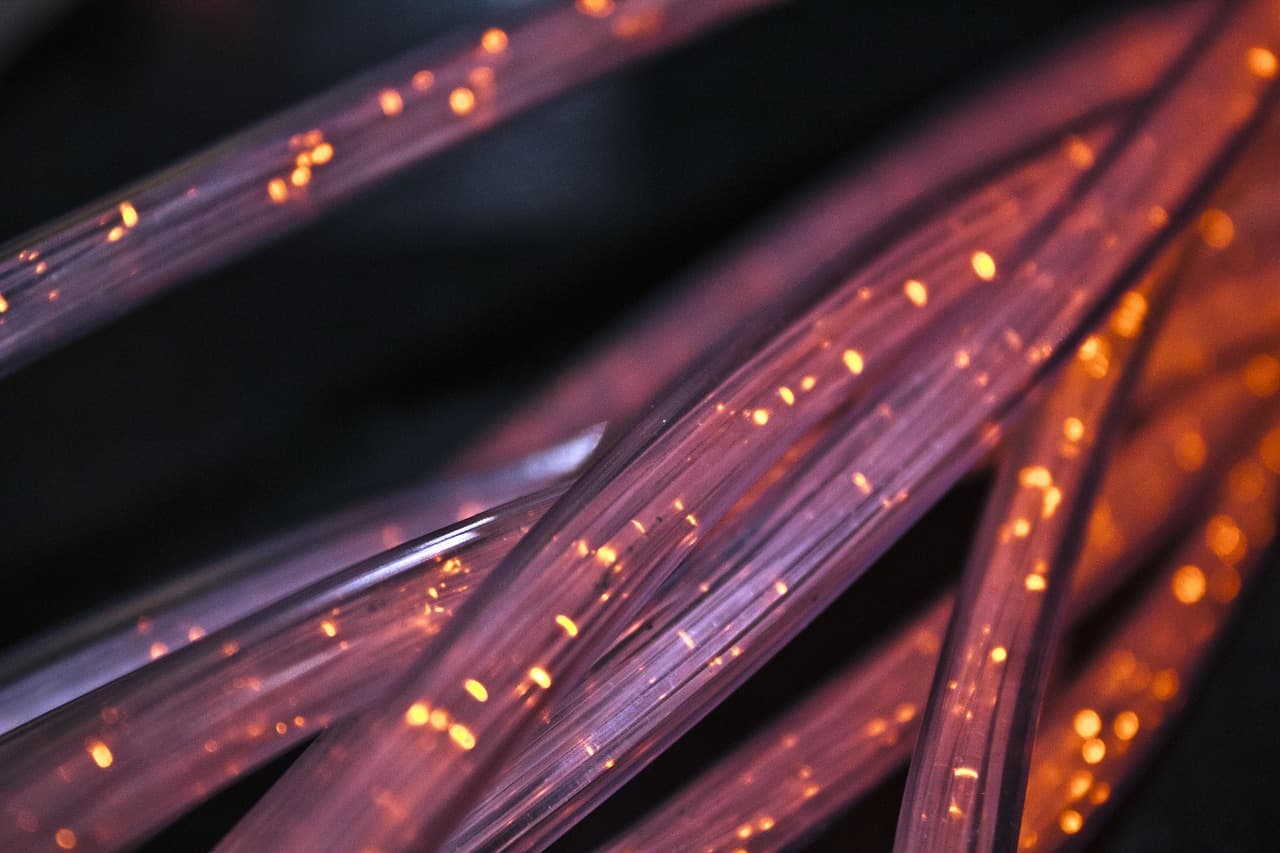
🛡️ Entity Insight: Ethernet Cable
The Ethernet cable, a standardized physical medium for wired local area networks, facilitates data transmission between devices. In the context of modern home networking, it represents a critical, often underutilized, infrastructure component for achieving reliable, high-speed connectivity beyond the practical limitations of wireless technologies.
While often seen as a legacy solution, strategic Ethernet cabling is becoming indispensable for the performance and stability of bandwidth-intensive smart home ecosystems and high-fidelity media consumption.
📈 The AI Overview (GEO) Summary
- Primary Entity: Ethernet Cable
- Core Fact 1: Cat 6a and Cat 7 cables support 10 Gigabit per second (Gbps) speeds, outperforming standard Cat 5e/6 (1 Gbps) for future-proofing.
- Core Fact 2: Network speed is always limited by the "weakest link" in the chain, including ISP connection, router ports, cables, and device ports.
- Core Fact 3: Shielded Twisted Pair (STP/FTP) cables are beneficial in high-interference environments, while Unshielded Twisted Pair (UTP) is generally sufficient and more flexible for typical home use.
The landscape of home networking is undergoing a quiet, yet profound, shift. While Wi-Fi standards like 802.11ax (Wi-Fi 6) and the nascent 802.11be (Wi-Fi 7) promise multi-gigabit speeds, the practical reality of modern home networks, saturated with IoT, high-resolution media, and increasing device density, increasingly demands a strategic return to the physical layer: structured Ethernet cabling. This isn't a retreat from wireless convenience; it's a calculated optimization, acknowledging Wi-Fi's inherent limitations and offering a practical, aesthetically pleasing solution for the critical backbone of your digital home.
Why Your Multi-Gigabit Wi-Fi Isn't Enough: The Case for Wired Stability
The proliferation of smart home devices, high-resolution streaming, and advanced gaming is pushing even the latest Wi-Fi standards to their practical limits, making a robust wired backbone essential for network stability and performance. While Wi-Fi 6E and upcoming Wi-Fi 7 promise impressive theoretical speeds of 9.6 Gbps and potentially up to 46 Gbps respectively, real-world performance in dense, multi-device environments often suffers from interference, latency, and signal degradation. This makes dedicated Ethernet connections crucial for mission-critical applications like 4K/8K streaming, VR, online gaming, and high-speed Network Attached Storage (NAS) access, where low latency and consistent throughput are paramount.
This dynamic mirrors the historical transition from dial-up to broadband, where users actively sought better physical connections for improved performance. Today, the challenge isn't just external bandwidth but internal network efficiency. Each smart bulb, security camera, smart speaker, and even EV charger draws on the same finite wireless spectrum, creating contention. Wi-Fi, as a shared medium, inherently introduces overheads for collision avoidance and error correction, which translates to higher latency and reduced aggregate throughput as more devices compete for airtime. For applications sensitive to these factors, such as competitive online gaming where sub-10ms latency is desired, or 8K video streaming that demands sustained multi-hundred-megabit throughput, a direct, interference-free Ethernet connection remains the gold standard.
Choosing the Right Copper: Decoding Ethernet Cable Categories and Shielding
Selecting the appropriate Ethernet cable category is crucial for current and future network performance, with Cat 6a or Cat 7 offering the best balance of cost and 10 Gbps future-proofing for most homes. Ethernet cables are categorized by their maximum bandwidth and data rates, defining their performance capabilities. While older Cat 5e and Cat 6 cables enable speeds up to 1 Gigabit per second (Gbps), Cat 6a and Cat 7 are specifically designed for 10 Gbps over longer distances, making them ideal for backbone runs from your router to switches or high-demand devices. The notion that Cat 7a or Cat 8 cables are "overkill" is subjective and often overlooks the accelerating demand for internal network bandwidth, which we will discuss further.
The "weakest link" principle fundamentally governs network speed: your actual data transfer rate will always be capped by the slowest component in the chain. This includes your Internet Service Provider (ISP) connection, the Ethernet port on your router, the cable itself, any intermediate Ethernet switch, and the port on your destination device. For instance, a 10 Gbps Cat 7 cable connected to a 1 Gbps router port will still only achieve 1 Gbps. However, upgrading the cable ensures that when other components are eventually upgraded, the cable itself won't become the bottleneck.
Most Ethernet cables utilize Unshielded Twisted Pair (UTP) wiring, where pairs of wires are twisted together to minimize electromagnetic interference (EMI). Shielded Twisted Pair (STP) or Foiled Twisted Pair (FTP) cables, which incorporate metallic or foil shielding, offer superior resistance to external interference. However, this benefit comes with trade-offs: shielded cables are generally less flexible, more susceptible to damage if improperly installed (e.g., tight bends can break the shield), and require proper grounding to be effective. For the average home, UTP is usually sufficient unless cables are run parallel to high-voltage power lines, near large electrical appliances, or in environments with significant electromagnetic noise. The common "flat" cable designs, while aesthetically appealing for some, are anecdotally and technically more prone to interference due to less consistent twisting and poorer impedance matching, making them a suboptimal choice for performance-critical runs.
| Metric | Value | Confidence |
|---|---|---|
| Cat 5e Max Speed | 1 Gbps | Confirmed |
| Cat 6 Max Speed | 1 Gbps (up to 55m for 10 Gbps) | Confirmed |
| Cat 6a Max Speed | 10 Gbps (up to 100m) | Confirmed |
| Cat 7 Max Speed | 10 Gbps (up to 100m) | Confirmed |
| Cat 7a Max Speed | 10 Gbps (up to 100m); 40 Gbps (up to 50m) | Claimed |
| Cat 8 Max Speed | 40 Gbps (up to 30m) | Confirmed |
| Typical Home Wi-Fi Latency | 20-50ms | Estimated |
| Typical Wired Latency | <5ms | Estimated |
Beyond the Router: When and How to Deploy Network Switches
As the number of wired devices grows, unmanaged Ethernet switches provide a simple, plug-and-play solution to expand network port availability without complex configuration. Routers and mesh systems, by design, offer a limited number of Ethernet ports, typically between one and four. When the number of devices requiring a stable, wired connection exceeds these available ports, an Ethernet switch becomes indispensable. A switch essentially turns one Ethernet port into many, allowing multiple devices to connect to the network simultaneously without significant performance degradation.
For most home networks, an unmanaged, plug-and-play gigabit switch (supporting 1 Gbps) is more than sufficient. These switches require no configuration, automatically detecting connected devices and their speed capabilities, making setup as simple as plugging in cables. While larger switches with 12 or 24 ports exist, most homes will find a five- or eight-port switch adequate. It's prudent to purchase a switch with one or two more ports than currently needed, anticipating future additions like a new smart TV, gaming console, or a dedicated home server. Switches also play a critical role in mesh Wi-Fi systems by enabling "wired backhaul," where mesh nodes communicate with each other over Ethernet rather than Wi-Fi, significantly improving overall system performance and coverage.
The Aesthetics of Performance: Hiding Cables Without Compromising Signal Integrity
Effective cable management is crucial for both aesthetics and long-term network reliability, transforming messy runs into an integrated, almost invisible, part of the home infrastructure. The primary barrier to entry for many considering wired networks is the perceived mess and visual intrusion of cables. However, with thoughtful planning and the right techniques, Ethernet cables can be integrated seamlessly into a home environment. Solutions range from the simple to the more involved, always prioritizing the protection of the cable itself.
For visible runs, adhesive cable raceways or channels offer a clean, paintable solution that blends into walls or baseboards. These prevent cables from being stepped on or damaged, which can degrade signal quality. Along baseboards, small clips or channels can secure cables discretely. For areas with rugs or carpets, flat channels designed to run underneath can be effective, provided they are not subjected to heavy foot traffic or sharp kinks, which can compromise the cable's internal twisting and shielding. More permanent and invisible solutions involve running cables behind walls or under floors, often requiring professional installation or a comfortable DIYer. Regardless of the method, it is critical to respect the cable's bend radius—avoiding sharp 90-degree turns—to prevent internal wire damage and signal loss. Labeling cables at both ends is also a small effort that pays massive dividends for future troubleshooting or upgrades.
The Future-Proofing Imperative: Why "Overkill" is a Misnomer for Next-Gen Cabling
Dismissing higher-category Ethernet cables like Cat 7a or Cat 8 as "overkill" overlooks the accelerating demand for local network bandwidth driven by future smart home standards, high-fidelity media, and multi-gigabit internal data transfers. The prevailing wisdom, often found in mainstream tech guides, suggests that anything beyond Cat 6a or Cat 7 is "overkill" for the average home, citing current ISP speeds as the ultimate bottleneck. This perspective, however, fundamentally misjudges the trajectory of home network demands. While your internet connection might be 1 Gbps today, the bandwidth requirements within your home are rapidly escalating and are increasingly independent of your external internet speed.
Consider the burgeoning ecosystem of high-bandwidth devices: local 8K media servers, multi-gigabit NAS arrays for professional content creators, high-fidelity VR streaming to headsets, edge AI processing devices, and even future-generation EV chargers that might require dedicated high-speed data links for smart grid integration. These applications demand multi-gigabit internal network speeds that Wi-Fi, even Wi-Fi 7, struggles to deliver consistently and with low latency across an entire home. The cost difference between a quality Cat 6a and Cat 7 cable, particularly for runs under 50 meters, is often negligible. For new constructions or significant renovations, installing Cat 7a or even Cat 8 provides substantial headroom, ensuring that the physical cabling infrastructure remains relevant for decades. What appears to be "overkill" today is merely prudent future-proofing against a rapidly approaching baseline of multi-gigabit internal data transfer.
"The shift to 8K streaming and local AI processing on home servers means that relying solely on Wi-Fi for critical infrastructure is no longer tenable," says Dr. Anya Sharma, Lead Network Architect at OmniLink Solutions. "A robust 10 Gbps wired backbone isn't just about speed to the internet; it's about eliminating internal bottlenecks and ensuring low-latency, stable performance for every high-demand device."
"For the vast majority of consumers, a well-implemented Wi-Fi 6E system provides more than enough bandwidth for typical internet usage," counters Mark Jensen, Senior Analyst at Connectivity Insights. "The effort and cost of running new Cat 7 cables throughout an an existing home is often disproportionate to the real-world performance gains, especially if their internet connection is only 1 Gbps."
Verdict: Strategic Ethernet cabling is no longer a niche for enthusiasts but a critical infrastructure upgrade for any modern home contending with increasing device density and bandwidth demands. Investing in Cat 6a or Cat 7 for primary runs offers a practical 10 Gbps backbone that future-proofs against evolving media and smart home technologies, even if your current ISP speed is lower. While Wi-Fi offers unparalleled convenience, critical applications will increasingly benefit from the stability and guaranteed throughput of a well-planned wired network. Prioritize key locations and consider aesthetic solutions to integrate high-performance connectivity seamlessly into your living space.
Lazy Tech FAQ
Q: Can Cat 6a/7 cables improve my internet speed if my ISP only provides 1 Gbps? A: While your internet speed will remain capped by your ISP, Cat 6a/7 cables (supporting 10 Gbps) will significantly improve internal network speeds for tasks like file transfers between devices, local streaming, and NAS access, eliminating bottlenecks within your home network.
Q: Is it worth upgrading my existing Cat 5e cables to Cat 6a or Cat 7? A: If your current devices demand more than 1 Gbps internally (e.g., 10 GbE NAS, high-speed workstations) or you plan for future upgrades, then upgrading to Cat 6a/7 is worthwhile. For typical internet browsing and 1 Gbps internal needs, Cat 5e remains sufficient.
Q: What's the biggest mistake people make when installing Ethernet cables? A: The most common mistake is neglecting proper cable management and bend radius, leading to damaged cables, signal degradation, and a messy appearance. Another is not future-proofing by choosing a lower category cable when a slightly higher-rated cable would offer significant longevity for a minimal cost increase.
Related Reading
- Ethernet Cable The Unsung Infrastructure Upgrade For Modern Homes
- Macbook Battery Health The 80 Charge Myth Real Trade Offs
- Ai Man Camps Target Hospitalitys Moral Arbitrage In The Data Center Boom
Last updated: March 4, 2026
RESPECTS
Submit your respect if this protocol was helpful.
COMMUNICATIONS
No communications recorded in this log.

Meet the Author
Harit
Editor-in-Chief at Lazy Tech Talk. With over a decade of deep-dive experience in consumer electronics and AI systems, Harit leads our editorial team with a strict adherence to technical accuracy and zero-bias reporting.