

Build an AI Marketing Team with Claude Code Skills
A technical guide for developers to build and orchestrate an AI marketing team using Anthropic's Claude Code and Skills framework. Learn setup, agent roles, and common pitfalls for multi-agent systems.

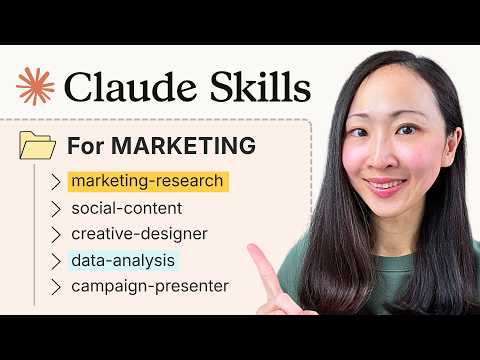
🛡️ What Is Claude Code and Claude Skills?
Claude Code is Anthropic's developer framework designed to build sophisticated, agentic AI applications by enabling Claude models to interact with external tools and orchestrate complex workflows. It allows developers to define specific "Skills" (functions or capabilities) that Claude agents can dynamically invoke, transforming a large language model from a reactive chatbot into a proactive, autonomous worker capable of multi-step reasoning and interaction with real-world systems.
Claude Skills are the fundamental building blocks that empower Claude agents to perform actions beyond text generation, facilitating tool use, API calls, and structured data processing.
📋 At a Glance
- Difficulty: Intermediate to Advanced
- Time required: 2-4 hours for initial setup and a basic team, plus iteration
- Prerequisites: Python 3.9+, Anthropic API key, fundamental understanding of LLM agents and prompt engineering, familiarity with
pipand virtual environments. - Works on: macOS, Linux, Windows (via WSL2 or native Python environment)
How Do Claude Skills Enable AI Marketing Teams?
Claude Skills provide the foundational capabilities for an AI marketing team by allowing distinct AI agents to perform specialized tasks, mimicking human team roles like content creation, SEO analysis, and campaign management. Each agent, powered by Claude, can be equipped with specific skills (e.g., "search the web," "generate blog post," "analyze keywords") and orchestrated to collaborate on broader marketing objectives, leading to more dynamic and context-aware outputs than single-prompt interactions.
Building an AI marketing team with Claude Code involves defining multiple AI agents, each with a specific role (e.g., "Content Strategist," "SEO Analyst," "Social Media Manager"). These agents are then equipped with "Skills" – programmatic functions that allow them to interact with external tools, APIs, or internal data sources. For instance, a Content Strategist agent might use a "research_topic" skill to query a knowledge base or search engine, while an SEO Analyst agent might use an "analyze_keywords" skill to interact with a keyword research API. Claude Code orchestrates the flow of information and task delegation between these agents, enabling a cohesive workflow.
What Are the Prerequisites for Building with Claude Code and Skills?
To begin developing with Claude Code and Skills, a stable Python environment (3.9 or newer), an activated Anthropic API key with sufficient credits, and familiarity with command-line operations are essential. These prerequisites ensure you have the necessary runtime, authentication, and tooling to install the SDKs, interact with the Claude API, and execute agentic workflows.
Before diving into code, ensure your environment is properly configured.
-
What: Install Python 3.9 or newer. Why: Claude Code SDKs are primarily Python-based and require a modern Python version for compatibility and features. How:
- macOS: Use Homebrew:
brew install python@3.10✅ What you should see: Installation output concluding with
Python 3.10.x installed. Verify withpython3.10 --version. - Linux (Ubuntu/Debian):
sudo apt update
sudo apt install python3.10 python3.10-venv
✅ What you should see: Installation output concluding with
python3.10 is already the newest version. Verify withpython3.10 --version. - Windows: Download the installer from python.org and ensure "Add Python to PATH" is checked during installation. For a more robust development environment, consider using Windows Subsystem for Linux (WSL2).
✅ What you should see: Successful installation wizard completion. Verify by opening Command Prompt or PowerShell and typing
python --version.
- macOS: Use Homebrew:
-
What: Obtain an Anthropic API Key. Why: Access to Claude models via Claude Code requires authentication with a valid API key, which also tracks your usage and billing. How:
- Navigate to the Anthropic Console.
- Sign up or log in.
- Go to "API Keys" in the sidebar.
- Click "Create New Key."
- Copy the generated key immediately; it will not be shown again.
⚠️ Warning: Treat your API key like a password. Do not hardcode it directly into your source code or commit it to public repositories. Use environment variables. ✅ What you should see: A newly generated API key string (e.g.,
sk-ant-api03-xxxxxxxxxxxxxxxxxxxxxxxxxxxxxxxxxxxxxxxx). -
What: Set up a Python Virtual Environment. Why: Virtual environments isolate your project's dependencies, preventing conflicts with other Python projects or your system's global Python installation. How:
python3.10 -m venv claude-marketing-env
source claude-marketing-env/bin/activate  # On Windows: .\claude-marketing-env\Scripts\activate
✅ What you should see: Your terminal prompt prefixed with
(claude-marketing-env), indicating the virtual environment is active.
How Do I Set Up My Development Environment for Claude Code?
Setting up your Claude Code development environment involves installing the Anthropic Python SDK, configuring your API key as an environment variable, and creating a project structure to house your agents and skills. This foundational setup ensures that your application can communicate with Claude models and manage its dependencies effectively.
Once your virtual environment is active, proceed with installing the necessary libraries.
-
What: Install the Anthropic Python SDK. Why: The Anthropic SDK provides the client library to interact with Claude models, including the
claude-codefeatures. How:pip install anthropic==0.23.1 # Specify version for stability. Check Anthropic docs for latest stable.⚠️ Warning: Always pin dependency versions (
==X.Y.Z) in production or shared development to prevent unexpected breaking changes from newer releases. ✅ What you should see: Output indicating successful installation ofanthropicand its dependencies. Verify by runningpip list | grep anthropic. -
What: Configure your Anthropic API Key as an Environment Variable. Why: Storing your API key as an environment variable (
ANTHROPIC_API_KEY) is the recommended and secure practice for authentication, preventing exposure in code. How:- Temporary (for current session):
export ANTHROPIC_API_KEY="sk-ant-api03-YOUR_ANTHROPIC_API_KEY" # macOS/Linux # For Windows Command Prompt: # set ANTHROPIC_API_KEY="sk-ant-api03-YOUR_ANTHROPIC_API_KEY" # For Windows PowerShell: # $env:ANTHROPIC_API_KEY="sk-ant-api03-YOUR_ANTHROPIC_API_KEY" - Persistent (recommended): Add the
exportcommand (orset/$env:) to your shell's profile file (e.g.,~/.bashrc,~/.zshrc,~/.profilefor macOS/Linux, or system environment variables for Windows). After editing, runsource ~/.zshrc(or equivalent) to apply changes.
✅ What you should see: No direct output, but you can verify by running
echo $ANTHROPIC_API_KEY(macOS/Linux) orecho %ANTHROPIC_API_KEY%(Windows Cmd) or$env:ANTHROPIC_API_KEY(Windows PowerShell), which should display your key. - Temporary (for current session):
-
What: Create a Project Directory Structure. Why: A well-organized project structure improves maintainability, scalability, and collaboration, especially for multi-agent systems. How:
mkdir claude_marketing_team
cd claude_marketing_team
mkdir agents skills tools config data
touch main.py agents/__init__.py skills/__init__.py
✅ What you should see: A directory structure similar to:
claude_marketing_team/
├── agents/
│   └── __init__.py
├── config/
├── data/
├── skills/
│   └── __init__.py
├── tools/
└── main.py
How Do I Define and Orchestrate AI Marketing Agents with Claude Skills?
Defining and orchestrating AI marketing agents with Claude Skills involves creating modular Python functions for specific marketing tasks, registering them as Claude tools, and then crafting system prompts that guide Claude agents to invoke these skills strategically based on their assigned roles. This structured approach enables complex, multi-step marketing workflows by allowing agents to communicate, execute external actions, and adapt to dynamic inputs.
This is the core of building your AI marketing team. We'll define a simple "Content Strategist" agent and a "SEO Analyst" agent, each with specific skills.
-
What: Define a Custom Skill for Web Search. Why: Most marketing tasks require up-to-date information. A web search skill allows agents to gather data beyond their training cutoff. We'll use a placeholder for a real search API for brevity. How: Create
skills/web_search.py:# skills/web_search.py import requests from typing import List, Dict, Any def perform_web_search(query: str) -> List[Dict[str, Any]]: """ Performs a web search for the given query and returns a list of search results. This is a placeholder for a real search API integration (e.g., Google Custom Search, SerpAPI). """ print(f"Executing web search for: '{query}'...") # In a real application, integrate with a search API # For demonstration, return mock data if "latest marketing trends" in query.lower(): return [ {"title": "AI in Marketing 2026: Trends & Predictions", "url": "https://example.com/ai-marketing-2026", "snippet": "AI-driven personalization and hyper-segmentation are key trends."}, {"title": "The Future of Content Creation with LLMs", "url": "https://example.com/llm-content", "snippet": "Generative AI is transforming content workflows across industries."} ] elif "top SEO keywords for AI tools" in query.lower(): return [ {"title": "SEO for AI Tools: Keyword Research Guide", "url": "https://example.com/seo-ai-keywords", "snippet": "Focus on long-tail keywords like 'AI marketing automation platforms' and 'generative AI content tools'."}, {"title": "Competitive Keyword Analysis for AI Startups", "url": "https://example.com/ai-startup-seo", "snippet": "Identify high-volume, low-competition keywords specific to niche AI applications."} ] else: return [ {"title": f"Search Result for '{query}'", "url": f"https://example.com/search?q={query}", "snippet": f"A relevant snippet for your query '{query}'."} ] # Define the tool schema for Claude Code web_search_tool = { "name": "perform_web_search", "description": "Performs a web search for a given query and returns relevant results.", "input_schema": { "type": "object", "properties": { "query": { "type": "string", "description": "The search query to execute." } }, "required": ["query"] } }✅ What you should see: The
web_search.pyfile created with the function and its corresponding tool schema. -
What: Define a Custom Skill for Content Generation. Why: A content generation skill allows an agent to draft marketing copy based on provided outlines or research. How: Create
skills/content_generation.py:# skills/content_generation.py def generate_blog_post_draft(topic: str, outline: str, keywords: List[str]) -> str: """ Generates a draft of a blog post based on a topic, outline, and target keywords. """ print(f"Generating blog post for topic: '{topic}' with outline: '{outline}' and keywords: {keywords}...") # In a real scenario, this would involve a more sophisticated prompt to Claude # or another LLM call to generate the actual content. draft = f""" # {topic} ## Introduction {outline.splitlines()[0] if outline else 'Introduce the topic and its relevance.'} ## Key Points - Point 1: Elaborate on {keywords[0] if keywords else 'first key concept'}. - Point 2: Discuss {keywords[1] if len(keywords) > 1 else 'second key concept'}. ## Conclusion Summarize the main takeaways and call to action. --- *Draft generated focusing on keywords: {', '.join(keywords)}* """ return draft # Define the tool schema for Claude Code generate_blog_post_tool = { "name": "generate_blog_post_draft", "description": "Generates a draft of a blog post based on a specified topic, outline, and target keywords.", "input_schema": { "type": "object", "properties": { "topic": { "type": "string", "description": "The main topic of the blog post." }, "outline": { "type": "string", "description": "A detailed outline for the blog post, including sections and sub-points." }, "keywords": { "type": "array", "items": {"type": "string"}, "description": "A list of target keywords to incorporate into the blog post." } }, "required": ["topic", "outline", "keywords"] } }✅ What you should see: The
content_generation.pyfile created with the function and its corresponding tool schema. -
What: Define the Agent Roles and Orchestration Logic. Why: Orchestration defines how different agents interact and when they use their skills to achieve a broader goal. This is where the "team" aspect comes into play. How: Create
main.pyin the root directory. This script will define our agents and their interaction logic.# main.py import os import anthropic from typing import List, Dict, Any # Import skills and their tool definitions from skills.web_search import perform_web_search, web_search_tool from skills.content_generation import generate_blog_post_draft, generate_blog_post_tool def run_marketing_team_workflow(client: anthropic.Anthropic, marketing_goal: str): """ Orchestrates a simple AI marketing team workflow using Claude Code and Skills. """ print(f"\n--- Starting Marketing Team Workflow for: '{marketing_goal}' ---\n") # --- Agent 1: Content Strategist --- # Role: Understand the goal, research topics, define content outline. content_strategist_system_prompt = f""" You are an expert Content Strategist for Lazy Tech Talk. Your goal is to develop a content plan and outline for a new marketing initiative. You have access to a web search tool to gather information. Based on the user's marketing goal: '{marketing_goal}', first perform a web search to understand current trends or relevant information. Then, propose a detailed content outline, including a main topic, key sections, and potential sub-points. Finally, identify 2-3 initial target keywords for the content. Your output should be structured and clear, ready for an SEO analyst and content generator. """ print("Content Strategist (thinking)...") messages = [ {"role": "user", "content": f"Develop a content plan for: '{marketing_goal}'."} ] strategist_response = client.beta.tools.messages.create( model="claude-3-opus-20240229", # Use Opus for complex reasoning, or Sonnet for cost-efficiency max_tokens=2000, system=content_strategist_system_prompt, messages=messages, tools=[web_search_tool] ) # Process tool calls from the Content Strategist tool_outputs = [] for content in strategist_response.content: if content.type == "tool_use": tool_name = content.name tool_input = content.input print(f"Content Strategist calls tool: {tool_name} with input: {tool_input}") if tool_name == "perform_web_search": search_results = perform_web_search(**tool_input) tool_outputs.append({ "type": "tool_result", "tool_use_id": content.id, "content": str(search_results) # Convert results to string for tool_result }) else: tool_outputs.append({ "type": "tool_result", "tool_use_id": content.id, "content": f"Unknown tool: {tool_name}" }) # Get the final response after tool execution if tool_outputs: strategist_final_response = client.beta.tools.messages.create( model="claude-3-opus-20240229", max_tokens=2000, system=content_strategist_system_prompt, messages=messages + strategist_response.content + tool_outputs, tools=[web_search_tool] ) content_plan_output = strategist_final_response.content[0].text else: content_plan_output = strategist_response.content[0].text print("\nContent Strategist's Plan:") print(content_plan_output) # Extract topic, outline, and initial keywords from the strategist's output # This parsing is crucial and often requires robust regex or another LLM call # For simplicity, we'll assume a structured output or use basic parsing. topic = "AI Marketing Trends in 2026" outline = "Introduction to AI in marketing; Key trends like personalization and automation; Impact on content creation; Conclusion." initial_keywords = ["AI marketing 2026", "generative AI content", "marketing automation trends"] if "Topic:" in content_plan_output: topic_line = [line for line in content_plan_output.splitlines() if "Topic:" in line] if topic_line: topic = topic_line[0].split("Topic:")[1].strip() if "Outline:" in content_plan_output: outline_start = content_plan_output.find("Outline:") outline_end = content_plan_output.find("Keywords:") if "Keywords:" in content_plan_output else len(content_plan_output) outline = content_plan_output[outline_start + len("Outline:"):outline_end].strip() if "Keywords:" in content_plan_output: keywords_line = [line for line in content_plan_output.splitlines() if "Keywords:" in line] if keywords_line: initial_keywords = [k.strip() for k in keywords_line[0].split("Keywords:")[1].strip().split(',')] # --- Agent 2: SEO Analyst --- # Role: Refine keywords, provide SEO recommendations. seo_analyst_system_prompt = f""" You are an expert SEO Analyst for Lazy Tech Talk. Your task is to refine the provided content plan and initial keywords for optimal search engine performance. You have access to a web search tool to research keyword competitiveness and relevance. Given the content topic: '{topic}', outline: '{outline}', and initial keywords: {initial_keywords}, perform a web search to identify more targeted, high-intent keywords. Provide a refined list of 3-5 keywords and any crucial SEO recommendations for the content. """ print("\nSEO Analyst (thinking)...") seo_messages = [ {"role": "user", "content": f"Refine SEO for the following content plan:\nTopic: {topic}\nOutline: {outline}\nInitial Keywords: {', '.join(initial_keywords)}"} ] seo_response = client.beta.tools.messages.create( model="claude-3-opus-20240229", max_tokens=1000, system=seo_analyst_system_prompt, messages=seo_messages, tools=[web_search_tool] ) seo_tool_outputs = [] for content in seo_response.content: if content.type == "tool_use": tool_name = content.name tool_input = content.input print(f"SEO Analyst calls tool: {tool_name} with input: {tool_input}") if tool_name == "perform_web_search": search_results = perform_web_search(**tool_input) seo_tool_outputs.append({ "type": "tool_result", "tool_use_id": content.id, "content": str(search_results) }) if seo_tool_outputs: seo_final_response = client.beta.tools.messages.create( model="claude-3-opus-20240229", max_tokens=1000, system=seo_analyst_system_prompt, messages=seo_messages + seo_response.content + seo_tool_outputs, tools=[web_search_tool] ) seo_output = seo_final_response.content[0].text else: seo_output = seo_response.content[0].text print("\nSEO Analyst's Recommendations:") print(seo_output) # Extract refined keywords from SEO analyst's output refined_keywords = initial_keywords # Fallback if "Refined Keywords:" in seo_output: keywords_line = [line for line in seo_output.splitlines() if "Refined Keywords:" in line] if keywords_line: refined_keywords = [k.strip() for k in keywords_line[0].split("Refined Keywords:")[1].strip().split(',')] elif "Keywords:" in seo_output: # Also check for generic keywords if 'Refined' isn't used keywords_line = [line for line in seo_output.splitlines() if "Keywords:" in line] if keywords_line: refined_keywords = [k.strip() for k in keywords_line[0].split("Keywords:")[1].strip().split(',')] # --- Agent 3: Content Generator --- # Role: Generate content based on the refined plan and keywords. content_generator_system_prompt = f""" You are a skilled Content Generator for Lazy Tech Talk. Your task is to write a draft blog post based on the provided topic, outline, and refined keywords. You have access to a blog post generation tool. Topic: '{topic}' Outline: '{outline}' Refined Keywords: {', '.join(refined_keywords)} Generate a comprehensive draft, ensuring the keywords are naturally integrated. """ print("\nContent Generator (thinking)...") generator_messages = [ {"role": "user", "content": "Generate the blog post draft now."} ] generator_response = client.beta.tools.messages.create( model="claude-3-haiku-20240307", # Haiku is good for generation tasks, faster and cheaper max_tokens=2000, system=content_generator_system_prompt, messages=generator_messages, tools=[generate_blog_post_tool] ) generator_tool_outputs = [] for content in generator_response.content: if content.type == "tool_use": tool_name = content.name tool_input = content.input print(f"Content Generator calls tool: {tool_name} with input: {tool_input}") if tool_name == "generate_blog_post_draft": blog_post_draft = generate_blog_post_draft(topic=topic, outline=outline, keywords=refined_keywords) generator_tool_outputs.append({ "type": "tool_result", "tool_use_id": content.id, "content": blog_post_draft }) if generator_tool_outputs: generator_final_response = client.beta.tools.messages.create( model="claude-3-haiku-20240307", max_tokens=2000, system=content_generator_system_prompt, messages=generator_messages + generator_response.content + generator_tool_outputs, tools=[generate_blog_post_tool] ) final_draft = generator_final_response.content[0].text else: final_draft = generator_response.content[0].text print("\n--- Final Blog Post Draft ---") print(final_draft) print("\n--- Workflow Completed ---") if __name__ == "__main__": anthropic_api_key = os.environ.get("ANTHROPIC_API_KEY") if not anthropic_api_key: raise ValueError("ANTHROPIC_API_KEY environment variable not set.") client = anthropic.Anthropic(api_key=anthropic_api_key) marketing_goal_input = "Create a blog post about the latest AI marketing trends for 2026." run_marketing_team_workflow(client, marketing_goal_input)✅ What you should see: The
main.pyfile created, containing the logic for orchestrating the Content Strategist, SEO Analyst, and Content Generator agents. -
What: Run the AI Marketing Team Workflow. Why: Executing the
main.pyscript initiates the multi-agent workflow, demonstrating how Claude agents can collaborate using their defined skills. How: Ensure your virtual environment is active andANTHROPIC_API_KEYis set.python main.py✅ What you should see: A series of print statements indicating each agent's thought process, tool calls, and the final generated blog post draft. The output will show the Content Strategist performing a web search, then proposing a plan, followed by the SEO Analyst refining keywords (also potentially using a web search), and finally the Content Generator drafting the post.
What Are the Common Pitfalls in Deploying Claude Skill Agents?
Common pitfalls in deploying Claude Skill agents include context window overflow, hallucination due to poor tool integration or prompt engineering, inefficient token usage leading to high costs, and difficulty managing complex state across multiple agent interactions. Overcoming these requires meticulous prompt design, robust error handling in skills, and strategic orchestration patterns.
-
Context Window Overflow and Token Management:
- Problem: As agents interact and generate responses, the cumulative conversation history and tool outputs can quickly consume the LLM's context window, leading to truncated responses, forgotten context, or errors.
- Solution: Implement summarization techniques for long conversations or tool results. Design skills to return concise, structured data rather than verbose text. Explicitly manage the
messageslist, potentially pruning older turns or only passing the most relevant recent interactions. Consider using different Claude models (e.g., Haiku for shorter, simpler steps; Opus for complex reasoning) to optimize token cost.
-
Tool Integration Complexity and Error Handling:
- Problem: Real-world APIs can be unreliable, return unexpected formats, or have rate limits. If a Claude Skill doesn't handle these gracefully, the agent workflow can break or produce nonsensical output.
- Solution: Wrap all external API calls within
try-exceptblocks. Implement clear error messages or fallback mechanisms within your skill functions. Ensure thetool_resultpassed back to Claude clearly indicates success or failure, allowing the agent to adapt. Design tool schemas (input_schema) to be precise, guiding Claude to call tools with correct parameters.
-
Agent Communication and Misinterpretation:
- Problem: Agents, even with well-defined roles, can misinterpret each other's outputs or fail to pass necessary information downstream, leading to disjointed workflows or incorrect results.
- Solution: Enforce structured outputs (e.g., JSON, XML) for agent-to-agent communication via system prompts. Explicitly define the expected input and output format for each stage of the workflow. Use a "supervisor" agent or a central orchestrator (as demonstrated in
main.py) to review and route information between specialized agents, ensuring coherence.
-
Prompt Engineering for Agentic Behavior:
- Problem: Crafting system prompts that reliably guide Claude to use tools, maintain its persona, and execute multi-step reasoning is challenging. Agents might "forget" their role or fail to invoke tools when appropriate.
- Solution: Iterate extensively on system prompts. Include explicit instructions for tool usage, desired output formats, and persona reinforcement. Use few-shot examples within the prompt to demonstrate desired behavior. Clearly state the agent's objective and constraints. Ensure the prompt guides the agent through the process of problem-solving, not just the final answer.
-
Cost Management:
- Problem: Complex, multi-turn agentic workflows, especially with larger models like Claude Opus, can incur significant API costs.
- Solution: Use the smallest effective model for each step (e.g., Haiku for simple content generation, Sonnet for moderate reasoning, Opus for critical, complex decision-making). Optimize prompts to reduce token count. Implement caching for frequently accessed data or skill results. Monitor API usage closely during development.
When Is Claude Code and AI Agent Orchestration NOT the Right Choice?
While powerful, Claude Code and AI agent orchestration are not always the optimal solution; they are overkill for simple, single-turn tasks, situations requiring deterministic, rule-based logic, or when existing specialized tools offer a more efficient, cost-effective solution. The overhead of designing, testing, and maintaining a multi-agent system often outweighs the benefits for less complex use cases.
-
Simple, Single-Turn Tasks: If your marketing need can be met with a single, well-crafted prompt to a foundational LLM (e.g., "Write five social media posts about our new product"), building an entire multi-agent system with Claude Code is unnecessary complexity. A direct API call or a basic chat interface is far more efficient.
-
Deterministic, Rule-Based Automation: For tasks that follow strict, unchanging rules (e.g., "If lead source is X and industry is Y, send email template Z"), traditional marketing automation platforms (e.g., HubSpot, Salesforce Marketing Cloud) or even simple scripting are superior. LLM agents introduce non-determinism, which is undesirable for processes requiring absolute predictability.
-
High-Volume, Low-Value Operations: If you need to generate thousands of variations of a simple ad copy or perform bulk data entry, the latency and cost associated with LLM agent orchestration can quickly become prohibitive. Specialized content generation APIs or structured data processing tools are often more performant and economical.
-
Lack of External Tool Integration Needs: The primary strength of Claude Code and Skills lies in enabling LLMs to interact with external systems. If your "marketing team" solely needs to perform text generation or analysis without needing to query databases, send emails, or interact with third-party APIs, then a simpler LLM integration without the agentic framework might suffice.
-
Small Scale or Limited Budget Projects: Developing robust agentic systems requires significant prompt engineering, testing, and iteration, which translates to developer time and API costs. For small-scale projects or startups with tight budgets, investing in a complex Claude Code setup might divert resources from core product development. A more focused, single-agent approach or leveraging existing SaaS solutions could be more pragmatic.
-
Real-time, Low-Latency Requirements: While Claude models are fast, orchestrating multiple agents, each potentially making API calls and tool invocations, adds cumulative latency. For applications requiring sub-second response times (e.g., real-time customer service bots with immediate actions), a simpler, more direct system might be necessary.
Last updated: July 28, 2024
Frequently Asked Questions
What is the primary advantage of using Claude Skills for an AI marketing team over traditional LLM prompting? Claude Skills enable LLMs to perform specific, tool-augmented actions and maintain state across complex workflows, allowing for more dynamic, multi-step, and reliable agentic behavior than what's achievable with static prompts. This is crucial for orchestrating an 'AI team' where agents need to interact with external tools and each other.
How can I manage prompt context and token usage efficiently when orchestrating multiple Claude Code agents? Efficient context management involves structuring agent communication through shared memory stores or structured outputs, employing summarization techniques for long-running conversations, and using function calling to pass only relevant data. Carefully define the scope of each agent's responsibility to minimize unnecessary information in prompts, and leverage Claude's context window capabilities strategically.
What are the key differences between Claude Code agents and other agentic frameworks like LangChain or LlamaIndex? Claude Code is Anthropic's native framework, deeply integrated with Claude models and optimized for its function calling and tool use capabilities, often simplifying development for Claude-centric applications. Other frameworks like LangChain offer broader model agnosticism and a wider array of pre-built integrations, but may require more explicit configuration to leverage Claude's specific strengths optimally. The choice depends on ecosystem preference and integration requirements.
Quick Verification Checklist
- Python 3.9+ is installed and accessible.
- Anthropic API key is set as
ANTHROPIC_API_KEYenvironment variable. -
anthropicSDK (version0.23.1or newer) is installed in your virtual environment. - Project directory structure (
agents,skills,main.py) is created. -
main.pyexecutes withoutANTHROPIC_API_KEYerrors. - The workflow prints output from each agent's "thinking" and tool calls.
- A final blog post draft is generated and displayed in the console.
Related Reading
- Claude Code in 2026: Execution, Agents, and Skills
- No-Code AI Agents in 2026: A Practical Guide
- Design with Claude Code: Figma MCP Integration Guide
Related Reading
RESPECTS
Submit your respect if this protocol was helpful.
COMMUNICATIONS
No communications recorded in this log.