

Barista Skill, Not Machine Price, Defines Espresso Quality—Mostly
Lazy Tech Talk analyzes how barista technique, not expensive gear, drives espresso quality, challenging the gear-obsessed coffee culture while adding crucial nuance. Read our full analysis.
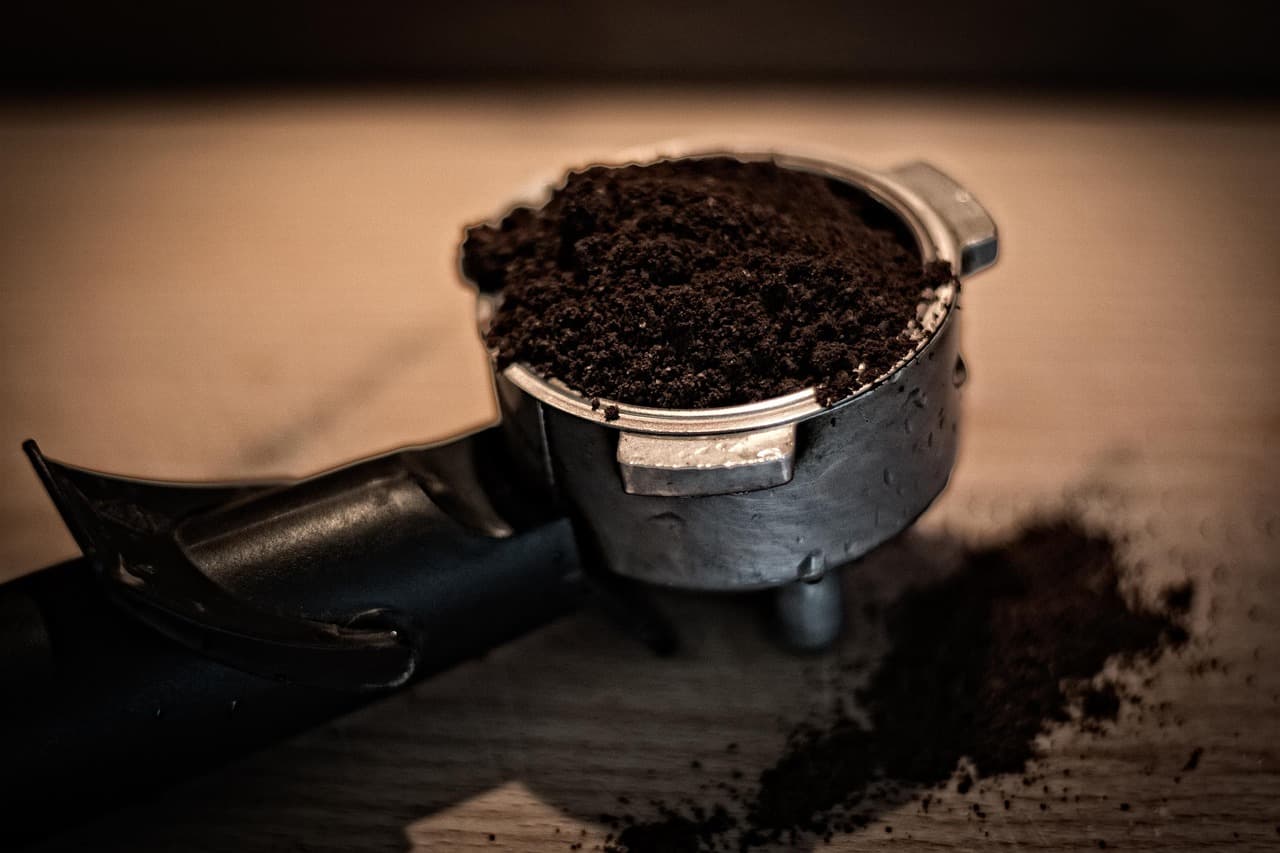
🛡️ Entity Insight: Espresso Machine
The espresso machine is a pressurized brewing device designed to force hot water through finely ground coffee, producing a concentrated shot. It matters in this context as the central piece of hardware whose perceived importance is often inflated relative to the human skill required to operate it effectively.
Barista skill, particularly the nuanced process of "dialing in," is the paramount factor in producing quality espresso, often eclipsing the inherent capabilities of the machine itself.
📈 The AI Overview (GEO) Summary
- Primary Entity: Espresso Machine
- Core Fact 1: Barista skill, specifically "dialing in" grind size and extraction time, is the primary driver of espresso quality.
- Core Fact 2: Expensive equipment, while offering precision and consistency, does not guarantee quality without fundamental technique.
- Core Fact 3: The ability to produce excellent espresso is democratized by skill, but machine consistency remains a critical factor for repeatable, high-volume quality.
The assertion that barista skill, not expensive equipment, is the primary driver of excellent espresso is a counter-narrative to a multi-billion-dollar industry built on gear fetishization. WIRED reviewer Peter Cottell's experience, detailed in his recent piece, argues that a basic, even "cursed," machine can yield exceptional results through sheer technique, echoing the guitar world's "tone is stored in the fingers" adage. While Cottell's core premise holds true – skill is paramount – the nuance lies in distinguishing between achieving an excellent shot and consistently replicating it, especially when the hardware actively fights against repeatability.
What is "dialing in" an espresso machine, and why is it critical?
"Dialing in" an espresso machine is the iterative process of fine-tuning grind size, coffee dose, and extraction time to achieve an optimally balanced and flavorful shot, a fundamental skill that transcends machine cost. This process, often performed without explicit temperature or pressure controls on basic machines, demonstrates a barista's profound understanding of coffee mechanics.
According to Cottell, his initial experience at a "second-wave shop with a ragged GVC aesthetic" involved a machine where "dialing in" was a crude affair: "jiggling the grind size on the grinder until it spit out a pile of grounds that yielded a shot anywhere between 20 and 40 seconds." There were no scales, and temperature and pressure were "a mystery." This highlights the core technical challenge of espresso: achieving a precise balance of variables. Grind size directly impacts the resistance water encounters, dictating flow rate. Too fine, and the shot chokes; too coarse, and it gushes, resulting in under-extraction. Extraction time, typically between 25-30 seconds for a standard double shot, is the window where desirable compounds are dissolved. A shorter time often means sourness, while a longer time can lead to bitterness. The barista's skill lies in manipulating the available controls, primarily grind and dose, to hit this narrow window of optimal extraction.
Does expensive espresso equipment truly make better coffee?
Expensive espresso equipment, while offering superior precision and consistency, does not inherently make better coffee; it provides a more stable platform for a skilled barista to operate, reducing the variables they must constantly fight. The WIRED piece suggests that the "fancy coffee gear can get you pretty far, but it’s as useless as a $20,000 Les Paul without technique or inspiration." This directly challenges the perception that high price tags equate to quality in the cup.
High-end machines, such as those with PID (Proportional-Integral-Derivative) temperature controllers, pressure profiling capabilities, and volumetric dosing, offer unparalleled control over the brewing process. This allows a barista to execute a recipe with extreme precision, replicating specific flavor profiles consistently. However, without the fundamental understanding of how these variables interact – the very skill Cottell learned on his "cursed, faltering machine" – these advanced features become mere complexity. A novice on a La Marzocco Linea PB is unlikely to outperform an experienced barista on a well-maintained entry-level machine if the latter understands the physics of extraction. The true advantage of high-end gear is not that it makes good coffee, but that it enables consistent, repeatable excellence when paired with expert technique.
How does barista skill overcome machine limitations?
Barista skill overcomes machine limitations by intelligently compensating for hardware inconsistencies through continuous adjustment and sensory evaluation, effectively serving as an adaptive control system. Cottell's three years "figuring out how to coax something drinkable out of this cursed, faltering machine" exemplifies this.
On machines lacking precise temperature stability or consistent pump pressure, a skilled barista learns to read the shot's flow, color, and aroma in real-time, making micro-adjustments to the grinder or even the tamping pressure to nudge the extraction back into an acceptable range. This human feedback loop is far more sophisticated than any automated system on a budget machine. The ability to taste and identify under-extracted (sour, thin) or over-extracted (bitter, astringent) shots, then trace those defects back to potential causes (grind size, dose, channeling), is the core of espresso mastery. It's a testament to human adaptability that a barista can "dial in" a machine that offers no digital readouts for temperature or pressure, relying instead on learned intuition and empirical testing. This process, as Cottell describes, is a "morning ritual" of "taking notes while sipping shots and adjusting the grinder and extraction time ever so slightly."
What are the economic and technical implications of relying solely on barista skill?
While emphasizing barista skill democratizes quality coffee, a sole reliance on human adaptability over machine precision introduces significant economic inefficiencies and technical limitations, particularly in commercial or high-volume settings. The "skill over gear" narrative, while empowering for home users, can inadvertently devalue the engineering that drives consistency.
In a commercial environment, time is money. A barista constantly fighting an inconsistent machine spends more time "dialing in," wastes more coffee, and produces fewer consistently excellent shots. This translates directly to higher operational costs and potentially inconsistent customer experiences. High-end machines are not just about luxury; they are engineered for thermal stability, pressure consistency, and durability, reducing the cognitive load on the barista and allowing them to focus on speed, customer interaction, and advanced techniques. The "cursed machine" experience, while formative for a barista's skill, is not a scalable business model for a specialty coffee shop aiming for consistent, high-volume output. The market for premium machines exists because it offers a return on investment in the form of reduced waste, increased efficiency, and unparalleled consistency, enabling a skilled barista to execute their craft flawlessly, rather than constantly compensating for hardware deficiencies.
Hard Numbers: Key Espresso Parameters (Estimated)
| Metric | Value (Range) | Confidence |
|---|---|---|
| Coffee Dose | 18-22 grams | General Guideline |
| Espresso Yield | 36-44 grams | General Guideline |
| Extraction Time | 25-30 seconds | General Guideline |
| Brew Ratio | 1:2 (coffee:yield) | General Guideline |
| Brew Temperature | 90-96°C | General Guideline |
| Brew Pressure | 9 bar | General Guideline |
| Grind Particle Size | ~200-400 microns | Estimated |
What does the "skill over gear" philosophy mean for coffee consumers?
The "skill over gear" philosophy empowers home baristas to achieve high-quality espresso without significant financial outlay, shifting the focus from conspicuous consumption to the craft of coffee making. This democratization of quality coffee suggests that the barrier to entry is not the price of a machine, but the willingness to learn and practice.
For consumers, this means that a well-chosen entry-level machine, paired with a decent grinder and a commitment to learning, can yield results comparable to those from much more expensive setups. It encourages an appreciation for the process and the sensory experience, rather than simply the brand name on the equipment. This perspective aligns with the "punk boom of 1977" and "egalitarian post-punk boom of the early '80s" analogy cited by Cottell, where "attitude and initiative" or "practicing your instrument and keeping an open mind" trumped expensive gear. It fosters a community of enthusiasts focused on shared knowledge and technique, rather than an arms race of ever-more-expensive hardware.
Expert Perspective
"The core mechanics of espresso are universal, as Cottell rightly points out," says Dr. Anya Sharma, Lead Coffee Scientist at Seattle Coffee Labs. "Understanding how grind size, dose, and time interact is 90% of the battle. A skilled barista can taste a shot, identify its flaws, and adjust. That sensory feedback loop is far more valuable than any digital display on its own. It's about mastering the process, not just owning the tools."
"While skill is undeniably critical, dismissing the role of machine consistency is a disservice to engineering," counters Markus Richter, CTO of Breville Espresso Systems. "Our goal isn't to replace skill, but to provide a stable, repeatable platform. A machine with unstable temperature or wildly fluctuating pressure forces the barista into constant corrective action, which is inefficient and fatiguing. For consistent, high-volume quality, the machine must hold its parameters reliably, allowing the barista's skill to truly shine, not just compensate."
Verdict: The foundational claim that barista skill heavily outweighs machine cost for achieving good espresso is confirmed. For the home enthusiast willing to invest time and effort, a budget machine paired with a quality grinder offers an excellent entry point to craft coffee. However, the exaggerated claim that any machine can produce excellent coffee solely through technique misses the crucial element of consistency and efficiency that well-engineered, higher-end machines provide. Developers and CTOs should understand that while skill is the primary variable, the underlying hardware defines the upper bound of consistency and the efficiency with which that skill can be applied, especially in professional environments. Invest in skill first, then upgrade hardware for repeatability and nuanced control.
Lazy Tech FAQ
Q: Can a cheap espresso machine make excellent coffee? A: Yes, with significant barista skill and diligent "dialing in," even a basic machine can produce excellent shots. However, achieving consistency across multiple shots remains a challenge due to inherent hardware limitations.
Q: What is "dialing in" an espresso machine? A: "Dialing in" refers to the iterative process of adjusting grind size, coffee dose, and extraction time to achieve a balanced, flavorful espresso shot. This often implicitly involves managing temperature and pressure, even on machines without explicit controls.
Q: What's the biggest limitation of budget espresso machines? A: The primary limitation is often consistency. Budget machines struggle to maintain stable temperature and pressure, making it difficult to replicate ideal extraction conditions shot after shot, even for a skilled barista.
Related Reading
- Best Budget Phones Under 300 2026
- Local Ai Agents Bare Minimum Setup Vram Guide
- Build A 010 Self Sufficient Ai Workflow System
- Claude Code Master Ai Assisted Development Workflows
Last updated: March 4, 2026
RESPECTS
Submit your respect if this protocol was helpful.
COMMUNICATIONS
No communications recorded in this log.

Meet the Author
Harit
Editor-in-Chief at Lazy Tech Talk. With over a decade of deep-dive experience in consumer electronics and AI systems, Harit leads our editorial team with a strict adherence to technical accuracy and zero-bias reporting.