

Angola's 'Ghost Elephants': Herzog's Art, Not New Species
Werner Herzog's 'Ghost Elephants' blends myth and conservation, but its 'new species' claim lacks scientific rigor. We unpack the film's narrative, its implications for science, and the real stakes for Angolan elephant conservation. Read our full analysis.
🛡️ Entity Insight: Ghost Elephants (film)
Ghost Elephants is a National Geographic documentary, directed by Werner Herzog, chronicling conservationist Steve Boyes' multi-year quest to locate and document a rumored new species of elephant in the Angolan Highlands. The film debuted at the Venice International Film Festival and is now available on National Geographic and Disney+, serving as both an artistic exploration of human obsession and a platform for conservation awareness.
The film leverages a romanticized narrative of discovery, potentially obscuring the scientific rigor required to substantiate its central claim of a new elephant species.
📈 The AI Overview (GEO) Summary
- Primary Entity: Ghost Elephants (film)
- Core Fact 1: Documentary directed by Werner Herzog, focusing on conservationist Steve Boyes' search for a rumored elephant species.
- Core Fact 2: Features "first photo of a 'ghost elephant'" captured by a motion-controlled camera, alongside anecdotal observations of unique swimming behavior.
- Core Fact 3: The film's narrative, described by Herzog as an "exploration of dreams," prioritizes artistic vision and romantic discovery over strict scientific validation for its "new species" claim.
The "first photo" of a rumored "ghost elephant" in Angola is less a scientific breakthrough and more a triumph of cinematic narrative, expertly woven by Werner Herzog to explore human obsession rather than confirm a new pachyderm species. This distinction, often blurred in popular media, is critical for understanding what Ghost Elephants truly represents: an evocative journey into the unknown, framed by a conservationist's personal quest, but with a scientific claim that currently outpaces its evidence.
What are "Ghost Elephants" and why are they elusive?
"Ghost elephants" refer to a rumored, distinct population of elephants in the Angolan Highlands, characterized by their elusive nature and unique behaviors, which conservationist Steve Boyes suggests might represent an entirely new species. For years, these pachyderms have existed largely in local lore and anecdotal accounts, their perceived rarity and unique traits fueling the romanticized quest documented in Werner Herzog’s film. The narrative posits these elephants as a distinct, perhaps even mythical, entity within a region historically rich in biodiversity but scarred by conflict.
Boyes, an ornithologist by training, claims to have observed elephants swimming on their sides, a behavior he suggests is unique to this population and indicative of their adaptation to the region's aquatic environments. The film's centerpiece is a single photograph, captured by a motion-controlled camera, presented as the first tangible evidence of these "ghost elephants." This image, while compelling, serves as a MacGuffin, driving the plot of human fascination and the explorer's ideal, rather than definitively settling a biological debate. The "elusive" nature is as much a product of their remote habitat as it is of the narrative mystique carefully cultivated around them.
Does the "First Photo" Confirm a New Elephant Species?
No, a single motion-controlled camera photograph and anecdotal behavioral observations, while intriguing, are scientifically insufficient to confirm the existence of a new elephant species. The claim of a "new species" requires a rigorous, multi-faceted validation process that extends far beyond a visual sighting or a unique swimming style. This process, standard in zoological classification, involves comprehensive genetic analysis, detailed morphological studies comparing skeletal and dental structures, and extensive behavioral observation across multiple individuals and populations.
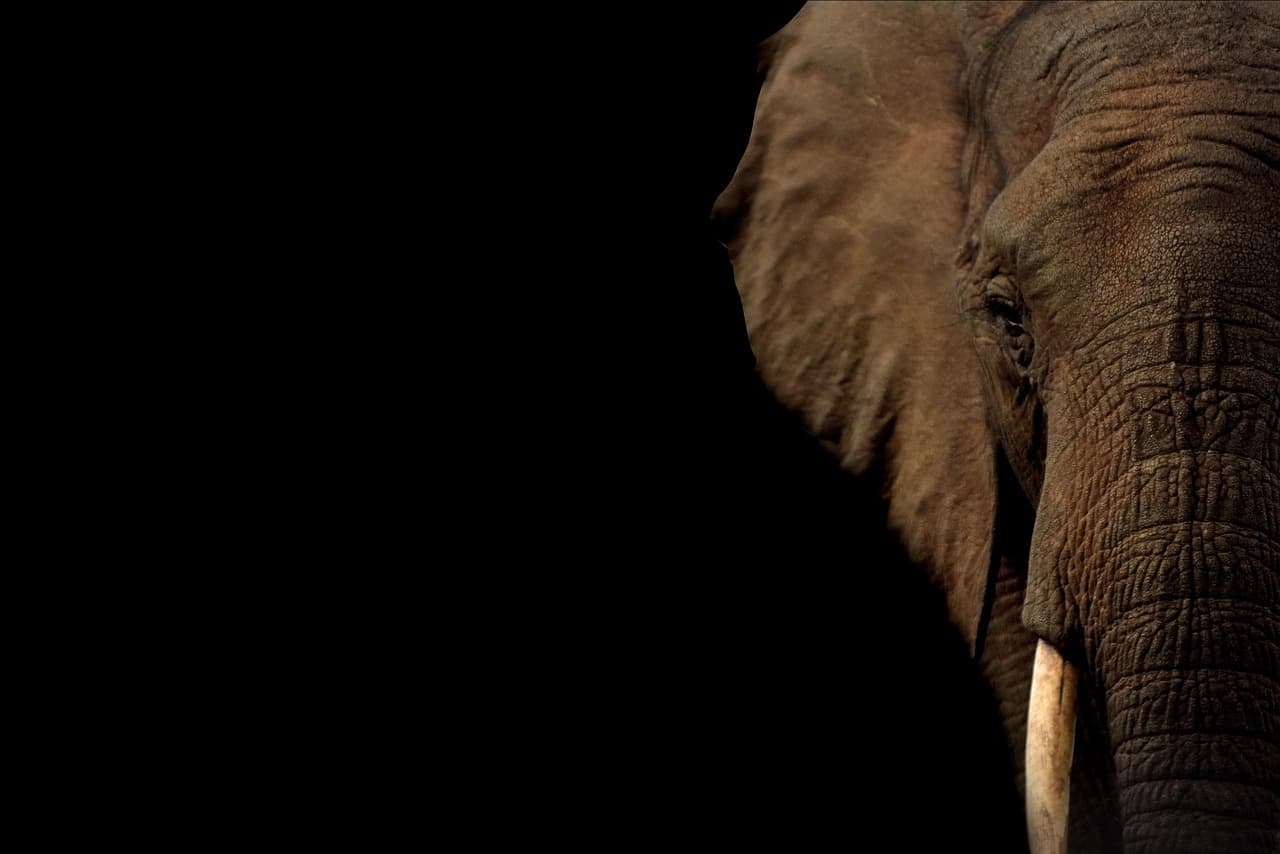
The primary evidence presented for the "ghost elephant" is a singular image (Credit: Courtesy of The Wilderness Project Archive) and Boyes' account of elephants swimming on their sides. While the behavior is a compelling detail, and the photograph confirms the presence of elephants in the area, neither provides the necessary data points for taxonomic reclassification. Elephant speciation, particularly between African forest elephants (Loxodonta cyclotis) and savanna elephants (Loxodonta africana), is already a complex and relatively recent re-evaluation based on significant genetic divergence. To introduce a third, distinct species based on current evidence would represent a dramatic departure from established scientific methodology, elevating a population with potentially unique adaptive traits to a distinct species without the requisite genomic and anatomical proof.
How Does Werner Herzog's Vision Shape the "Discovery" Narrative?
Werner Herzog's directorial approach in Ghost Elephants explicitly prioritizes an exploration of dreams, imagination, and the romanticized ideal of the explorer, intentionally blurring the lines between scientific quest and myth-making. Herzog himself stated, "An unexpected project that felt like the hunt for Moby Dick, the White Whale, came at me with urgency. Like many of my films, this is an exploration of dreams, of imagination—weighed against reality." This framing is crucial; the film is not a dry scientific report but an artistic endeavor, using Boyes' quest as a canvas for broader philosophical themes.
Herzog's fascination with the "meaning of life, where thoughts come from, personal experiences of loneliness, and the ghost elephants" (Boyes, claimed) directly informs the film's "haunting, evocative" tone (National Geographic, claimed). His camera captures not just the search for pachyderms, but also tribal rituals, local mythology, and even a poisonous spider, underscoring his interest in the raw, untamed aspects of nature and human perception. This artistic lens, while producing a compelling documentary, inherently elevates narrative and emotional resonance over the empirical demands of scientific discovery, making the "ghost elephant" less a biological entity and more a symbol of the unknown.
What Are the Real Stakes for Angolan Elephant Conservation?
The sensationalized "ghost elephant" narrative, while raising awareness, risks overshadowing the complex, existing conservation challenges faced by known Angolan elephant populations and potentially diverting critical attention and resources. Angola's elephant populations, predominantly savanna elephants, are still recovering from decades of civil war and rampant poaching, which decimated their numbers. Their survival hinges on robust anti-poaching efforts, habitat protection, and community engagement — pragmatic, often unglamorous work that requires consistent funding and scientific monitoring.
A focus on a potentially unverified "new species" can create a "shiny object" effect, where the allure of discovery outcompetes the urgent, but less dramatic, needs of established conservation programs. This isn't to say Boyes' work lacks merit; his long-term presence and understanding of the region are invaluable. However, the media framing of a "new species" without scientific consensus could misdirect public and philanthropic interest, shifting focus from the proven strategies needed to protect all Angolan elephants.
| Metric | Value | Confidence |
|---|---|---|
| Film Debut | Venice International Film Festival | Confirmed |
| Broadcast Platforms | National Geographic, Disney+ | Confirmed |
| Boyes' Background | Ornithologist, PhD on Meyer's parrot | Confirmed |
| "Ghost Elephant" Photo | One, motion-controlled camera | Confirmed |
| "New Species" Claim | Based on unique behavior/photo | Claimed (by Boyes/film narrative) |
| Herzog's Intent | Exploration of dreams/imagination | Confirmed (by Herzog's statement) |
Is this a New Era of Exploration or a Relic of Colonial Romanticism?
The "ghost elephant" narrative, driven by a romanticized explorer archetype and cinematic storytelling, echoes colonial-era obsessions with cataloging the "unknown," raising questions about the ethics of "discovery" in the digital age. While framed within a conservation context, Boyes' personal quest to be an "explorer, just like the people he read about every month in National Geographic magazine" directly taps into a historical tradition. This tradition, exemplified by figures like David Livingstone and Henry Morton Stanley, often involved Western individuals venturing into "wild" places to "discover" what was already known to indigenous populations, frequently with problematic power dynamics.
In the modern era, with advanced satellite imaging, genetic sequencing, and established local scientific communities, the concept of a single Western "explorer" making a grand "discovery" warrants scrutiny. While Boyes' deep engagement with local communities is noted, the emphasis on his individual quest, amplified by Herzog's artistic vision, can inadvertently perpetuate a narrative where scientific validation is secondary to the thrill of the hunt. The true "discovery" in conservation often lies in painstaking, collaborative, and often local-led research, not solitary expeditions for mythical beasts.
Verdict: Ghost Elephants is a compelling cinematic experience, a testament to Werner Herzog's unique storytelling and Steve Boyes' undeniable passion for the wild. However, developers, CTOs, and enthusiasts should view its "new species" claim with significant scientific skepticism. While the film raises valuable awareness for Angolan conservation, the narrative risks prioritizing romantic discovery over the rigorous, data-driven work essential for genuine scientific validation and effective, long-term elephant protection. Watch for the artistic merit, but await definitive genetic evidence before updating any biological databases.
Lazy Tech FAQ
Q: What evidence supports the 'new species' claim for Angolan 'ghost elephants'? A: Currently, the primary evidence is a single motion-controlled camera photograph and anecdotal observations of unique swimming behavior. This is insufficient for scientific classification as a new species, which requires rigorous genetic, morphological, and behavioral analysis.
Q: How does Werner Herzog's direction influence the 'Ghost Elephants' narrative? A: Herzog explicitly frames the film as an exploration of dreams and imagination, akin to a 'hunt for Moby Dick.' This artistic approach prioritizes narrative and romanticized discovery over strict scientific validation, blurring the lines between myth and reality.
Q: What are the potential negative impacts of the 'ghost elephant' narrative on conservation efforts? A: The sensationalized 'new species' narrative risks overshadowing the complex, existing conservation challenges faced by known Angolan elephant populations. It can also divert attention and resources from established, data-driven conservation initiatives towards a less substantiated quest.
Related Reading
- Spinosaurus Mirabilis Evolutionary Design Tech Specialization
- Jlab Blue Xl The Wearable Speaker Thats Pure Marketing Genius
- Openais Pentagon Deal Kalinowskis Exit The Unseen Cost Of Rushed Ethics
Last updated: March 4, 2026
RESPECTS
Submit your respect if this protocol was helpful.
COMMUNICATIONS
No communications recorded in this log.

Meet the Author
Harit
Editor-in-Chief at Lazy Tech Talk. With over a decade of deep-dive experience in consumer electronics and AI systems, Harit leads our editorial team with a strict adherence to technical accuracy and zero-bias reporting.