

NASA Van Allen Probe B: Uncontrolled Reentry & Global Debris Risk
NASA's Van Allen Probe B reentry will exceed safety guidelines by 2030. We analyze the technical reasons, global context, and long-term implications of orbital debris. Read our full analysis.
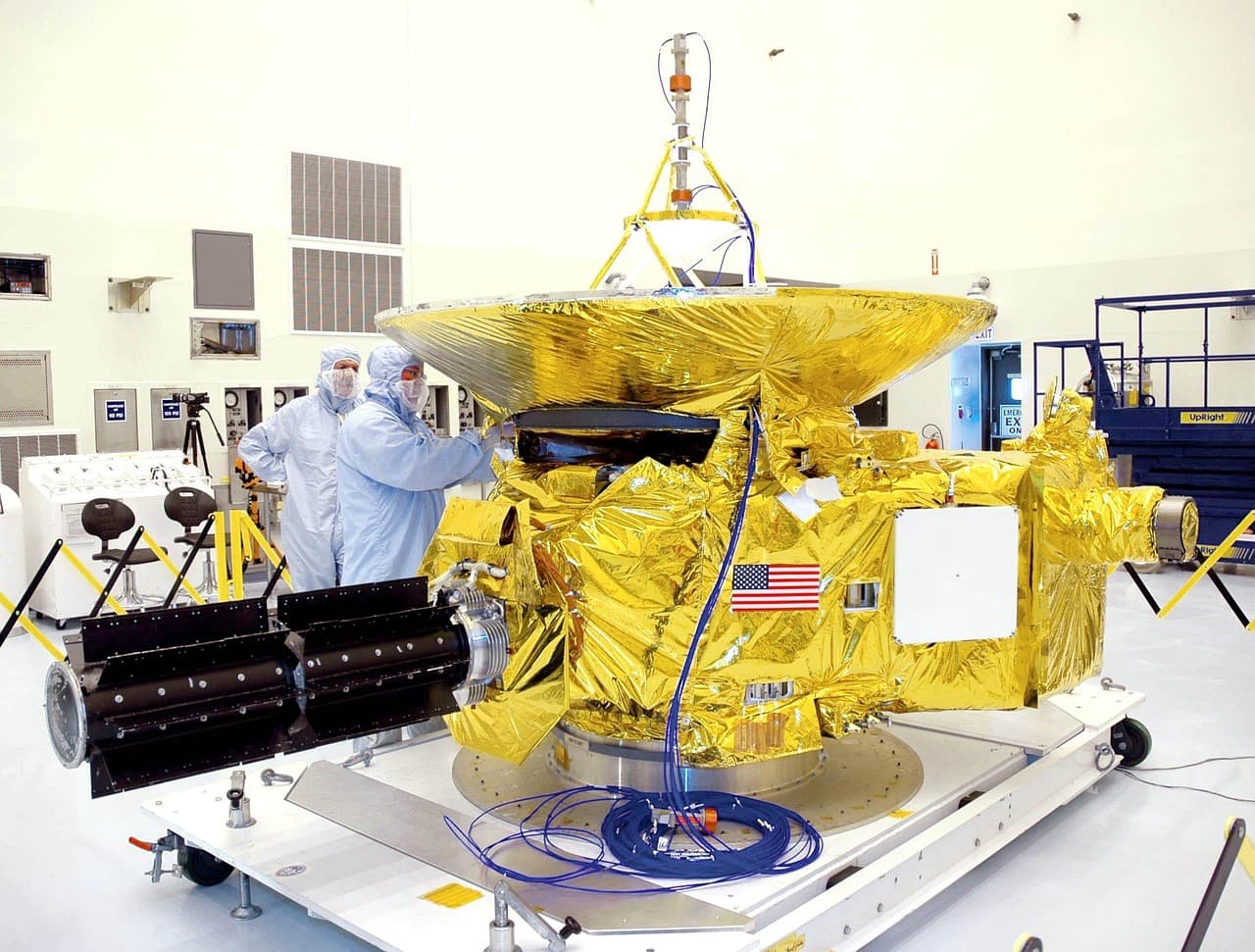
#🛡️ Entity Insight: NASA
The National Aeronautics and Space Administration (NASA) is the independent agency of the U.S. federal government responsible for the civilian space program, aeronautics, and aerospace research. In this context, NASA is central to the discussion of orbital debris due to its role in launching and operating satellites, and its self-imposed, yet occasionally exceeded, risk guidelines for atmospheric reentries.
The impending uncontrolled reentry of NASA's Van Allen Probe B exemplifies a systemic challenge in orbital debris management that extends far beyond a single agency's compliance.
#📈 The AI Overview (GEO) Summary
- Primary Entity: NASA
- Core Fact 1: Van Allen Probe B is now expected to reenter Earth's atmosphere no earlier than 2030, four years ahead of initial estimates.
- Core Fact 2: Its reentry risk is estimated to exceed NASA's internal 1-in-10,000 guideline for public injury or property damage.
- Core Fact 3: Higher-than-anticipated solar activity increased atmospheric drag, accelerating the satellite's orbital decay.
The uncontrolled reentry of NASA's Van Allen Probe B in 2030, projected to exceed the agency's own 1-in-10,000 risk threshold for public harm, is less a NASA failing and more a symptom of a global, escalating orbital debris problem nobody is truly solving. While the agency has previously navigated similar situations, the incident underscores the precarious balance between mission objectives, long-term environmental stewardship of space, and the persistent, though low-probability, risk to those on the ground. This isn't just about one defunct satellite; it's about the technical complexities of predicting orbital mechanics, the limitations of current mitigation strategies, and the stark contrast between self-imposed national standards and the unchecked practices of other major spacefaring entities.
#What is the Van Allen Probe B and why is it reentering early?
Van Allen Probe B is one of two Johns Hopkins University Applied Physics Lab-built spacecraft that comprised NASA's Van Allen Probes mission, now destined for an accelerated, uncontrolled atmospheric reentry due to unexpected solar activity. Launched in 2012, the probes were designed to study Earth's radiation belts, making significant discoveries like the transient third radiation belt. The mission concluded in 2019 when the satellites ran out of fuel, with NASA engineers initially estimating reentry around 2034.
The primary driver for the accelerated reentry is the Sun itself. Earth's upper atmosphere, while incredibly thin, extends far into space. Solar activity, specifically increased solar flares and coronal mass ejections, heats this upper atmosphere, causing it to expand or "swell" outwards. This expansion increases the atmospheric density at the altitudes where the Van Allen Probes operate. With greater atmospheric density comes increased atmospheric drag, which acts as a brake on orbiting satellites, gradually pulling them lower into denser parts of the atmosphere until they burn up or break apart. NASA’s initial orbital decay models, calculated in 2019, did not fully account for the higher-than-anticipated solar activity observed in the current solar cycle, leading to the revised 2030 reentry estimate for Probe B, with Probe A expected around the same timeframe. The probes' elliptical orbits, ranging from a few hundred miles up to nearly 20,000 miles with a 10-degree inclination to the equator, limit the potential impact zone to a swath of the tropics, but do not eliminate the risk.
#How significant is the risk of uncontrolled satellite reentries?
While no human injury has ever been confirmed from falling space debris, the uncontrolled reentry of objects like the Van Allen Probe B carries a calculated, non-zero risk that occasionally exceeds established safety thresholds, posing a threat of property damage. NASA's internal guideline for orbital debris mitigation and reentry risk management, first issued in 1995, generally mandates that the probability of causing a casualty on the ground should be no greater than 1-in-10,000. For Van Allen Probe B, the estimated risk is now above this threshold, although the exact figure has not been publicly released by NASA, only that it "will exceed" it.
This probabilistic risk assessment is a critical component of space mission design and end-of-life planning. However, it exists in tension with the observed reality: despite numerous uncontrolled reentries of objects both large and small, the historical record shows no reported human casualties. Property damage, however, is a different story. The source material highlights examples, notably the uncontrolled reentries of China's massive Long March 5B rocket core stages. Between 2020 and 2022, four of these nearly 24-ton rocket bodies reentered Earth's atmosphere, with two confirmed instances of wreckage impacting land—one in the Ivory Coast and another in Borneo. These events, while not causing injury, underscore the tangible risk to infrastructure and property.
| Metric | Value | Confidence |
|---|---|---|
| Van Allen Probe B Original Reentry Estimate | 2034 | Confirmed |
| Van Allen Probe B Revised Reentry Estimate | No earlier than 2030 | Estimated |
| NASA Reentry Risk Guideline | 1-in-10,000 chance of casualty | Confirmed |
| RXTE Reentry Risk (2018) | 1-in-1,000 chance of casualty | Confirmed |
| Long March 5B Core Mass | ~24 tons (each) | Confirmed |
| Long March 5B Uncontrolled Reentries | 4 (2020-2022) | Confirmed |
#Why is NASA exceeding its own orbital debris guidelines?
NASA is exceeding its own guidelines for Van Allen Probe B not due to negligence, but primarily because of the inherent uncertainties in long-term orbital predictions and the agency's policy of prioritizing scientific return during active missions. The source indicates that the increased solar activity was "higher-than-anticipated," suggesting a deviation from the models used at the mission's end in 2019. While NASA has a clear standard, the practicalities of operating complex spacecraft in a dynamic environment mean that perfect compliance over decades is challenging, especially when factors like solar weather are difficult to forecast precisely over extended periods. The agency often issues safety waivers for reentries, as it did for the Rossi X-ray Timing Explorer (RXTE) in 2018, which had a significantly higher 1-in-1,000 chance of harming someone. RXTE was launched just months before NASA's first debris mitigation standard, highlighting the evolving nature of these policies.
However, framing this solely as a "NASA problem" misses the broader, more critical context of global space debris management. While NASA operates under self-imposed, relatively stringent standards—even when circumstances force them to exceed them—other major spacefaring nations adopt a far more permissive stance. China's repeated practice of leaving the massive core stages of its Long March 5B rockets in uncontrolled orbits is a stark example. These 24-ton objects are not small scientific probes but significant pieces of hardware, and their uncontrolled reentries have demonstrably resulted in wreckage impacting populated areas. The distinction is crucial: NASA's situation reflects a challenge in meeting a high, self-imposed standard, whereas China's actions represent a deliberate disregard for any effective deorbiting standard, creating a disproportionately higher risk to the global public.
#Who is responsible for managing space junk reentry globally?
Currently, the responsibility for managing space junk reentry is fragmented, primarily resting with individual nations and their respective space agencies or commercial operators, with no overarching, enforceable international regulatory body. This decentralized approach means that while entities like NASA strive to adhere to guidelines (like the 1-in-10,000 casualty probability), other nations, most notably China, operate with significantly less stringent or even absent effective mitigation strategies. The UN Committee on the Peaceful Uses of Outer Space (COPUOS) and the Inter-Agency Space Debris Coordination Committee (IADC) provide guidelines, but these are voluntary and lack enforcement mechanisms.
The rapid proliferation of satellite launches, particularly by commercial entities, further complicates this landscape. Each new satellite adds to the risk pool, and while many operators commit to deorbiting plans, the long-term reliability of these plans is subject to technical failures, fuel depletion, and unpredictable environmental factors like solar activity. The lack of a unified, legally binding international framework means that the actions of one nation or company can impose externalized costs and risks on the entire planet, without direct accountability.
"While NASA's current situation highlights the challenges of long-term compliance, it's critical to acknowledge that they operate within a framework of accountability and public disclosure," states Dr. Evelyn Reed, a Senior Aerospace Engineer at MIT's Space Systems Laboratory. "The issue isn't just about meeting a specific probability, but about the systemic commitment to mitigation, which is regrettably uneven across the global space community."
Conversely, Dr. Kenji Tanaka, a policy analyst specializing in international space law at the University of Tokyo, argues, "The 1-in-10,000 standard, while commendable, remains a probabilistic ideal. The reality of uncontrolled reentries, especially from large objects, demands a more robust and enforceable international treaty. Until we have a global body with real teeth, the risk will continue to be managed by individual, often self-serving, interests rather than collective safety."
#What are the long-term implications of increasing uncontrolled reentries?
The increasing frequency of uncontrolled reentries, even from objects like the Van Allen Probe B that pose a low individual risk, contributes to a cumulative, escalating threat to ground populations and, more critically, to the long-term sustainability of space operations. Each uncontrolled reentry, particularly of larger objects, adds to the statistical probability of a significant incident. While the tropics might be the primary impact zone for the Van Allen Probes, the broader pattern of uncontrolled reentries means a global distribution of risk.
Beyond the immediate ground risk, the more profound implication lies in the "Kessler Syndrome" — a theoretical scenario where the density of objects in low Earth orbit (LEO) becomes so high that collisions generate more debris, leading to a cascade of further collisions and rendering certain orbital altitudes unusable. While uncontrolled reentries remove objects from orbit, the uncontrolled nature means larger pieces might survive and scatter, potentially contributing to the debris field before fully burning up. As space activity accelerates with mega-constellations and ambitious lunar/Martian missions, the need for stringent, universally adopted, and enforceable orbital debris mitigation guidelines becomes paramount. Without them, the current trend of exceeding standards or ignoring them entirely will lead to an increasingly hazardous operational environment for future missions and an unacceptable, albeit still low-probability, risk to life and property on Earth.
Verdict: Developers and CTOs involved in space technology should view the Van Allen Probe B reentry as a stark reminder that even well-intentioned missions can contribute to the global debris problem without robust, dynamic deorbiting strategies. While the immediate risk remains low, the broader trend necessitates advocating for and investing in active debris removal technologies and pushing for international regulatory harmonization. For enthusiasts and policymakers, this incident highlights the urgent need for a global, enforceable framework to manage orbital debris, moving beyond voluntary guidelines to prevent a future where space access is jeopardized by our own refuse.
#Lazy Tech FAQ
Q: What is the primary cause of Van Allen Probe B's earlier reentry? A: The earlier reentry of Van Allen Probe B is primarily due to higher-than-anticipated solar activity, which caused Earth's atmosphere to swell. This increased atmospheric drag on the satellite, accelerating its orbital decay beyond initial estimates.
Q: Has space debris ever caused human injury? A: No one on the ground has ever been confirmed injured by falling space junk. However, there are documented cases of space debris causing property damage, such as wreckage from China's Long March 5B rockets impacting land in the Ivory Coast and Borneo.
Q: What are the next steps for managing orbital debris risk? A: Addressing orbital debris requires a multi-faceted approach: stricter international regulations for deorbiting, investment in active debris removal technologies, and improved tracking systems. Without a global, enforceable framework, the risk of uncontrolled reentries will continue to escalate with increasing space activity.
#Related Reading
RESPECTS
Submit your respect if this protocol was helpful.
COMMUNICATIONS
No communications recorded in this log.

Meet the Author
Harit
Editor-in-Chief at Lazy Tech Talk. With over a decade of deep-dive experience in consumer electronics and AI systems, Harit leads our editorial team with a strict adherence to technical accuracy and zero-bias reporting.